
How to Choose an Industrial Robot Maintenance Service Provider? Response Speed, Diagnostic Capability, Spare Parts, and Acceptance Criteria
When selecting an industrial robot maintenance service provider, comprehensively evaluate fault response, controller and mechanical body diagnostic capabilities, spare parts sources, maintenance records, and on-site acceptance procedures.
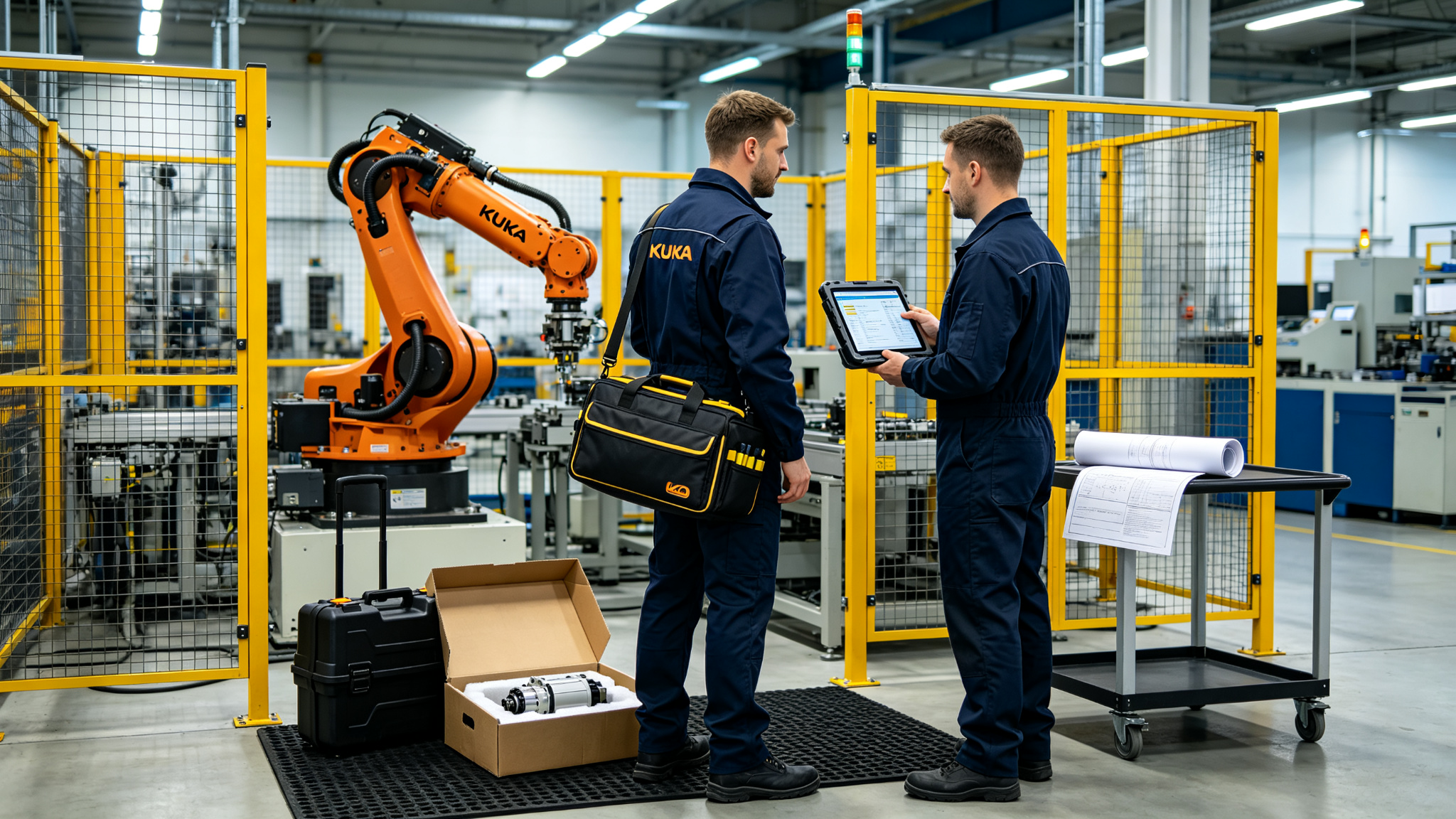
After an industrial robot experiences downtime, whether the service provider can quickly arrive on-site is only one part of the assessment. What truly affects the quality of recovery is their ability to preserve fault evidence, distinguish between controller and mechanical issues, provide matching spare parts, and complete load-bearing and safety verification after repair.
- Fault Response and Remote Pre-diagnosis
When reporting a fault, provide the robot brand, model, controller version, alarm code, fault occurrence posture, and on-site photos. The service provider should be able to preliminarily categorize the fault scope—such as power supply, drive, feedback, communication, safety circuits, or the mechanical body—based on this information, rather than just repeatedly requesting a device restart.
- Diagnostic and Repair Capabilities
Confirm whether the service scope covers controllers, servo drives, servo motors, teach pendants, body cables, reducers, and peripheral I/O. For electronic components, they should have conditions for power, signal, and load testing. For mechanical components, they should be able to check clearance, abnormal noise, vibration, temperature rise, and lubrication status.
- Spare Parts and Data Management
Spare parts should be verified for complete model number, hardware version, interface, and compatibility with the robot. Before replacing the main computer, axis computer, or encoder, system backups, zero points, tool data, and I/O configurations should be saved first to prevent production inability due to missing data even after hardware recovery.
- Acceptance Criteria
After repair completion, verify cold start, low-speed manual operation, automatic cycles, repeat positioning, rated load, safety doors, emergency stops, and peripheral interlocks. The acceptance record must specify the fault cause, replaced components, parameter changes, and continuous operation results.
When choosing an industrial robot maintenance service provider, the focus should not be on the lowest single-item quote, but on whether fault localization, repair, spare parts, data recovery, and on-site acceptance can form a complete closed loop.
Industrial Robot Maintenance Hotline: +86 18122009539
Contact Maintenance Engineer: +86 18122009539