
ABB Robot Maintenance for Suspected Wrist Oil Leakage
Learn how to document, inspect, and assess suspected ABB robot wrist oil leakage before deciding whether sealing or mechanical repair is required.
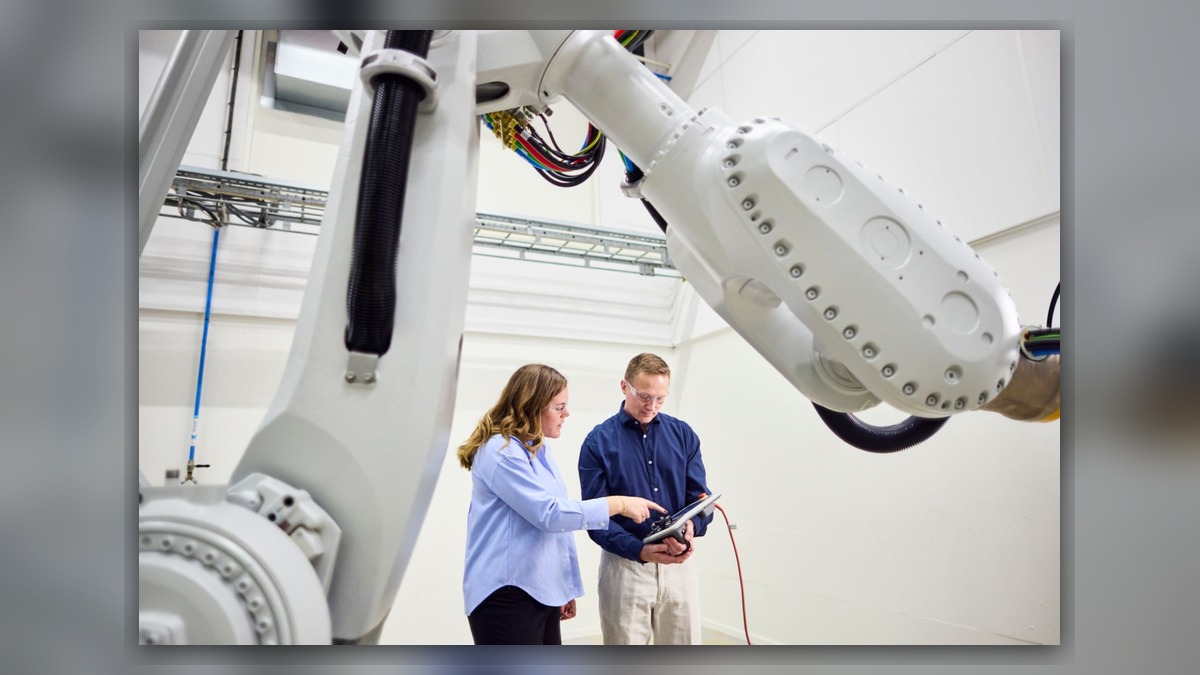
ABB robot maintenance for suspected wrist oil leakage should begin by confirming the fluid source, affected wrist axis, robot posture, and operating conditions. Oil around a wrist housing may involve a seal, joint interface, lubrication point, attached process equipment, or fluid migrating from another location. Record the robot and controller identities, alarm history, recent service work, and leakage pattern before cleaning the area. Visible oil alone does not prove that a reducer, bearing, or motor is damaged, and replacing parts without locating the source can leave the original problem unresolved.
Symptoms and Scope
This diagnostic approach applies to ABB articulated robots with visible oil or grease-like residue around a wrist joint, wrist flange, housing seam, or nearby cable route. Exact lubrication systems, seal arrangements, lubricant specifications, inspection limits, and service procedures depend on the installed robot model and its product manual.
The procedure does not establish an internal component failure from appearance alone. Residue may have migrated under gravity, centrifugal force, cleaning activity, or robot motion. Fluid from a welding torch, dispensing tool, dress package, or other process equipment can also resemble robot lubricant. Leakage from a robot base, balancing system, external axis, or controller requires a separate diagnosis.
Information to Record First
Preserve evidence before wiping the wrist clean. Photographs should show both the close-up leakage area and the surrounding assembly so that the fluid path and robot orientation remain clear.
Complete alarm code and full text: Record all related messages without abbreviating them.
Date and exact time: Record when the residue or active leakage was first observed.
Faulted axis: Identify the wrist axis or state that the source remains unknown.
Robot position/posture: Record the posture in which leakage was found.
Program step or motion: Identify the operation being performed before discovery.
Actual speed and load condition: Obtain these from approved production records or system information where available.
Reset result: State whether any related alarm could be reset.
Time until recurrence: Record whether fluid reappears after cleaning and controlled operation.
Related power, communication or feedback alarms: Preserve the complete alarm history.
Also record the ABB robot model, serial number, controller model, installed payload, tool configuration, component labels, maintenance history, lubricant service history, and any recent collision or wrist repair. Do not assume that the current tool data or payload data are correct; verify them against controlled site records.
Safety and Preparation
Stop production and secure the robot according to the applicable ABB instructions and the facilityâÂÂs energy-control procedure. Account for gravity, stored mechanical energy, attached tooling, process pressure, hot surfaces, and hazardous process fluids. Personnel should not place themselves beneath an unsupported arm or enter the safeguarded space solely to watch for leakage.
Do not open a wrist housing, loosen structural fasteners, remove a motor, or add lubricant without the model-specific maintenance procedure. An uncontrolled opening can release lubricant, disturb calibration, expose internal parts to contamination, or create an unsafe axis condition.
ABB Robot Maintenance Diagnostic Sequence
- Identify the fluid. Compare its color, consistency, odor, and location with documented robot lubricants and process fluids, using the relevant safety data and maintenance records. If identification remains uncertain, collect evidence without claiming that the material came from the robot.
- Trace the highest credible source. Inspect the wrist flange, housing joints, plugs, covers, motor interfaces, dress package, tool hoses, and process connections for a continuous wet path. The lowest visible drop is not necessarily the source. If an external hose or tool fitting is wet above the robot joint, isolate that process-system possibility before planning robot disassembly.
- Review recent work and events. Determine whether lubrication service, tool replacement, cable work, cleaning, collision recovery, or wrist repair preceded the observation. This information can direct inspection toward a disturbed interface, but timing alone does not confirm causation.
- Inspect for associated mechanical evidence. With the robot safely isolated, check accessible external areas for damaged covers, loose external hardware, impact marks, contamination accumulation, and abnormal flange condition. Do not infer reducer damage from oil residue alone. Noise, backlash, repeatability change, temperature concerns, or motor alarms require separate evaluation under the applicable ABB procedure.
- Clean and establish a reference condition. Once evidence has been recorded and the fluid has been identified as nonhazardous to handle under site rules, clean only the permitted external surfaces. Mark the inspected area in the maintenance record rather than applying substances that could enter the joint or obscure a seal.
- Determine whether controlled observation is justified. A suitably competent person may observe the robot only under controlled conditions, following ABB operating information and site safety procedures. Do not repeat a collision, overload, or risky motion merely to reproduce leakage. If residue reappears, record its first location, posture, motion, elapsed operating period, load condition, and any associated alarms.
How to Distinguish Similar Causes
A process-fluid source becomes more likely when the wet path begins at tooling, tubing, a valve, or an external fitting. Residue left after earlier maintenance becomes more plausible when the area does not become wet again after cleaning and controlled operation. A seal or joint-interface concern may require professional inspection when fresh lubricant consistently emerges from the same robot interface, particularly when accompanied by another verified mechanical symptom.
None of these observations independently proves damage to a motor, reducer, bearing, or feedback-related component. Diagnostic decisions should combine the leakage source, recurrence evidence, alarm history, mechanical condition, maintenance records, and model-specific limits.
When Repair or Replacement May Be Considered
Remove the robot from production evaluation if leakage is active, lubricant loss cannot be assessed, contamination could reach the product or workspace, or another safety or mechanical symptom is present. Professional ABB robot repair may be appropriate when the source is internal, access requires wrist disassembly, calibration could be affected, or the correct lubricant quantity and sealing procedure cannot be verified on site.
Replacement parts must match the exact robot model, component part number, hardware revision, and connector or mounting arrangement. Seal replacement should not be treated as sufficient until the underlying sealing surface, shaft condition, housing interface, lubrication state, and possible mechanical loading factors have been evaluated according to the applicable documentation.
For broader inspection support, the ABB robot repair service is described at https://autonews.best/abb-robot-repair. ZHB is an independent industrial robot inspection, repair, and maintenance service provider that also supplies parts to overseas customers; it does not represent manufacturer authorization.
Verification After Repair or Maintenance
Before restart, confirm that removed covers and external connections are restored, the work area is clean, required lubrication work is documented, and any affected calibration or mastering requirement has been addressed using ABB procedures. Review tool and payload records where mechanical loading may have contributed to the condition.
Controlled restart should begin with the siteâÂÂs approved checks and restricted operation appropriate to the installation. Competent personnel should monitor the repaired area without entering an unsafe position. Verify that no fresh leakage appears, no new alarm is generated, motion remains normal, and the robot performs the approved production task under documented conditions. Continued monitoring may be necessary because a static inspection cannot establish whether leakage will recur during changing wrist orientations.
Information Required for a Repair Inquiry
A useful repair inquiry should include the robot model, controller model, complete alarm code and alarm history, affected component label, fault conditions, maintenance history, and clear photographs of the wrist and suspected source. Include the robot posture, tool and payload information, recent collision or service details, fluid description, cleaning result, and time until recurrence. This evidence helps determine whether on-site inspection, component repair, sealing work, or further mechanical diagnosis should be considered.
Conclusion
Suspected ABB wrist oil leakage requires source identification rather than immediate component replacement. Preserve evidence, distinguish robot lubricant from process fluid, inspect the external flow path, review recent work, and document recurrence under safe controlled conditions. Escalate the case when leakage is active, its source is internal or uncertain, or it appears with alarms or verified mechanical changes.