
ABB IRB 4600 Repair for Wrist Repeatability Loss
Diagnose ABB IRB 4600 wrist repeatability loss by checking tooling, calibration, cables, joints, feedback, and operating conditions before replacing parts.
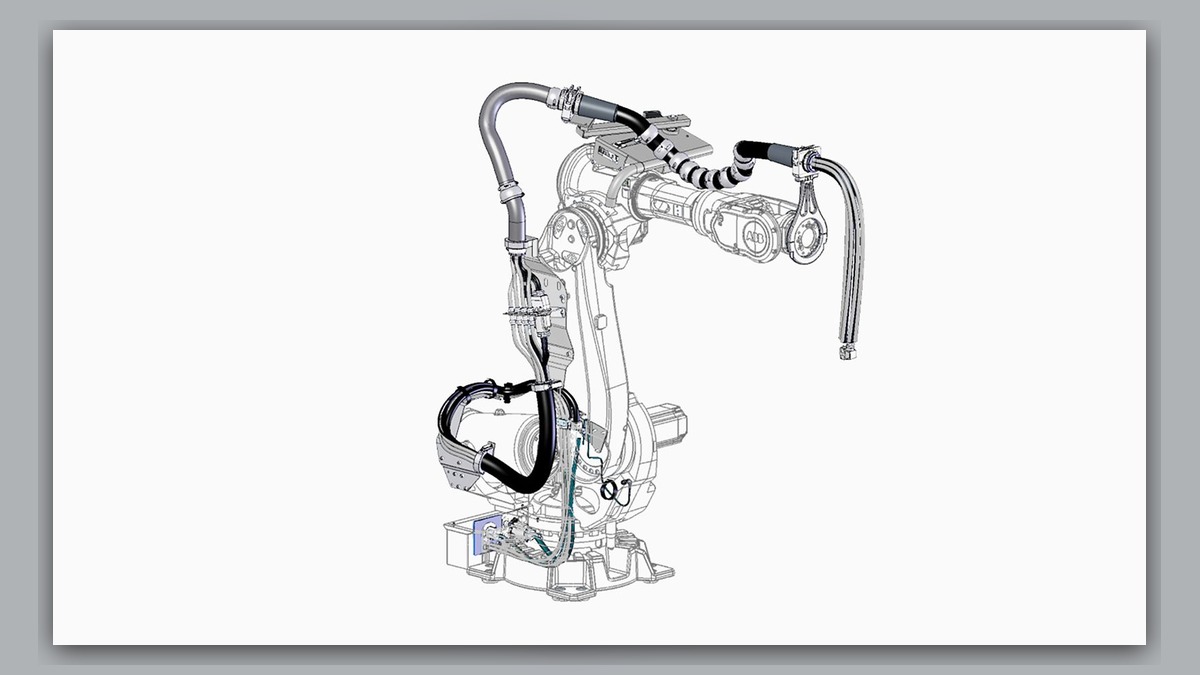
ABB robot repair for IRB 4600 wrist repeatability loss should begin by separating tooling movement, calibration errors, cable forces, mechanical play, and feedback-related faults. Record the affected axis, robot position, program step, payload, speed, alarm history, and recurrence pattern before changing components. A robot that misses a point does not by itself prove that a motor, gearbox, or feedback-related component is damaged. Movement elsewhere in the cell can produce a similar result.
Symptoms and Scope
This diagnostic approach applies to an ABB IRB 4600 when the wrist repeatedly approaches the same programmed point but does not maintain the expected position or orientation. The condition may affect one wrist axis, several wrist axes, or the complete tool pose.
Typical observations include inconsistent tool position, orientation changes at the same target, variation after wrist reversal, or a result that changes with payload or posture. These observations indicate where to investigate, but they do not independently identify a failed component.
This article does not cover a completely stationary axis, controller boot failure, emergency-stop faults, or a confirmed calibration-loss event. If an IRC5 alarm is present, use its complete code and text to determine whether a more specific diagnostic procedure applies.
Information to Record First
Preserve the original programs, system data, tool data, work objects, calibration records, and recent backups before making changes. Do not recalibrate the robot simply to see whether the symptom disappears, because that can remove useful evidence or introduce another variable.
Complete alarm code and full text:
Date and exact time:
Faulted axis:
Robot position/posture:
Program step or motion:
Actual speed and load condition:
Reset result:
Time until recurrence:
Related power, communication or feedback alarms:
Also record the IRB 4600 variant, serial information, IRC5 controller model, installed wrist tooling, payload data, recent collisions, maintenance work, and any exchanged motor, gearbox, cable, or tool component. Consult the ABB manual corresponding to the exact robot and controller configuration rather than relying on an ABB 4600 manual for a different variant or software environment.
Safety and Preparation
Place the robot in a safe condition according to the applicable ABB instructions and the factory lockout procedure before touching tooling, connectors, covers, or mechanical joints. Support any equipment that could move under gravity. Do not enter the safeguarded space or release brakes unless the task is authorized and performed by competent personnel using an approved procedure.
Observation under motion may be performed only by suitably competent personnel under controlled conditions, following manufacturer operating information and site safety rules. Do not repeat a collision, overload, or hazardous movement merely to reproduce the fault.
ABB Robot Repair Diagnostic Sequence
1. Confirm that the reference is stable. Inspect the fixture, robot base, workpiece location, tool mounting face, adapter plates, and fasteners for visible movement or damage. A displaced fixture or loose end effector can appear to be robot repeatability loss. If the reference hardware moves, correct and verify that condition before investigating the wrist.
- Compare the failure pattern. Determine whether the deviation occurs at every target, only after a particular wrist direction, only in certain postures, or only with a specific payload. A posture-dependent result can direct attention toward cable routing, tool interference, or a joint condition, but it is not proof of any one cause. Preserve the actual path, tool, work object, and load data used when the condition appeared.
- Review recent changes. Check whether the problem began after a collision, tool exchange, programming edit, mastering or calibration work, motor replacement, gearbox service, or dress package adjustment. Verify that the active tool and load data correspond to the installed equipment. Do not change calibration or load values without confirming the approved data.
- Inspect external wrist conditions. With the equipment safely isolated, look for loose tooling, impact marks, damaged wrist covers, abnormal cable tension, pinched hoses, displaced brackets, and connectors that are visibly loose or contaminated. The dress package should not pull the wrist away from its commanded position or become tight at the affected posture. Correct routing must be verified against the installed configuration.
- Check for mechanical evidence. Authorized personnel can assess whether the affected wrist joint has unusual free movement, noise, roughness, or resistance using the applicable ABB maintenance procedure. Any conclusion must account for brake state, gearbox characteristics, adjacent-axis movement, and tool leverage. Hand-applied force without a defined method cannot quantify backlash or confirm gearbox damage.
- Review controller evidence. Examine the IRC5 event history for axis, drive, communication, power, or feedback-related alarms occurring before or with the positioning symptom. An alarm preceding the visible deviation may determine the correct diagnostic branch. If the controller itself requires inspection, information about ABB IRC5 controller inspection and repair is available at https://autonews.best/products/abb-irc5-kong-zhi-gui-yu-ji-xiu.
How to Distinguish Similar Causes
A loose tool or fixture usually moves the physical reference independently of the robot joint. Incorrect tool or work-object data can produce a consistent path error rather than random repeatability loss. Cable force may change with wrist posture or direction. Mechanical wear may be associated with directional change, noise, or detectable play, although proper inspection is required. A feedback-related problem may be accompanied by relevant alarms or inconsistent axis-position information, but the event history and configuration must support that conclusion.
Temperature, payload, speed, and process forces should also be recorded when they correlate with the symptom. Correlation alone is not proof of internal damage. Avoid replacing a motor, gearbox, drive unit, or feedback-related component solely because the tool missed a programmed point.
When Repair or Replacement May Be Considered
Professional inspection may be appropriate when external references are stable, configuration data is verified, and the symptom remains repeatable under an approved test. The inspection scope may include the wrist mechanism, motor, brake, gearbox, robot cabling, connectors, and relevant IRC5 drive hardware, depending on the collected evidence.
Before ordering a spare, match the exact robot variant, component model, ABB part number, hardware revision, and connector layout. Compatibility should be confirmed from the installed component label and applicable documentation rather than inferred from the IRB 4600 family name.
ZHB is an independent industrial robot inspection, repair, and maintenance service provider that also supplies parts to overseas customers. For an ABB robot repair inquiry, provide the robot model, controller model, complete alarm code, alarm history, component label, fault conditions, and clear photographs of the robot, wrist, tooling, connectors, and affected parts. Relevant service information is available at https://autonews.best/abb-robot-repair.
Verification After Repair or Adjustment
After authorized work, confirm that guards, connectors, tooling, cables, and safety devices have been restored correctly. Verify the approved calibration status, active tool data, work-object data, payload configuration, and controller event history before production release.
Use a controlled validation path that does not intentionally recreate a damaging event. Check the relevant targets from approved approach directions and under defined operating conditions. Any motion verification must be conducted by competent personnel under the applicable ABB instructions and site safety procedure. Record the result so future changes can be compared against the same baseline.
Common Diagnostic Mistakes
Common errors include recalibrating before preserving evidence, assuming every point error is robot backlash, ignoring fixture movement, testing with unverified tool data, and replacing the motor or gearbox without controller evidence. Another mistake is using documentation for a different IRB 4600 variant or IRC5 configuration. Accurate identification and a repeatable test condition are essential to an effective industrial robot repair decision.
Conclusion
IRB 4600 wrist repeatability loss requires evidence-based separation of external movement, data errors, cable forces, mechanical conditions, and feedback or drive issues. Record the fault conditions first, verify stable references and configuration, inspect external wrist conditions, and use controller history to guide deeper testing. Repair or replacement should follow confirmed inspection findings, not the positioning symptom alone.