
ABB Servo Motor Repair: Motor, Cable, or Drive Fault?
Learn how to separate ABB servo motor, cable, feedback, and drive causes before repair, replacement, or controlled restart after an axis fault.
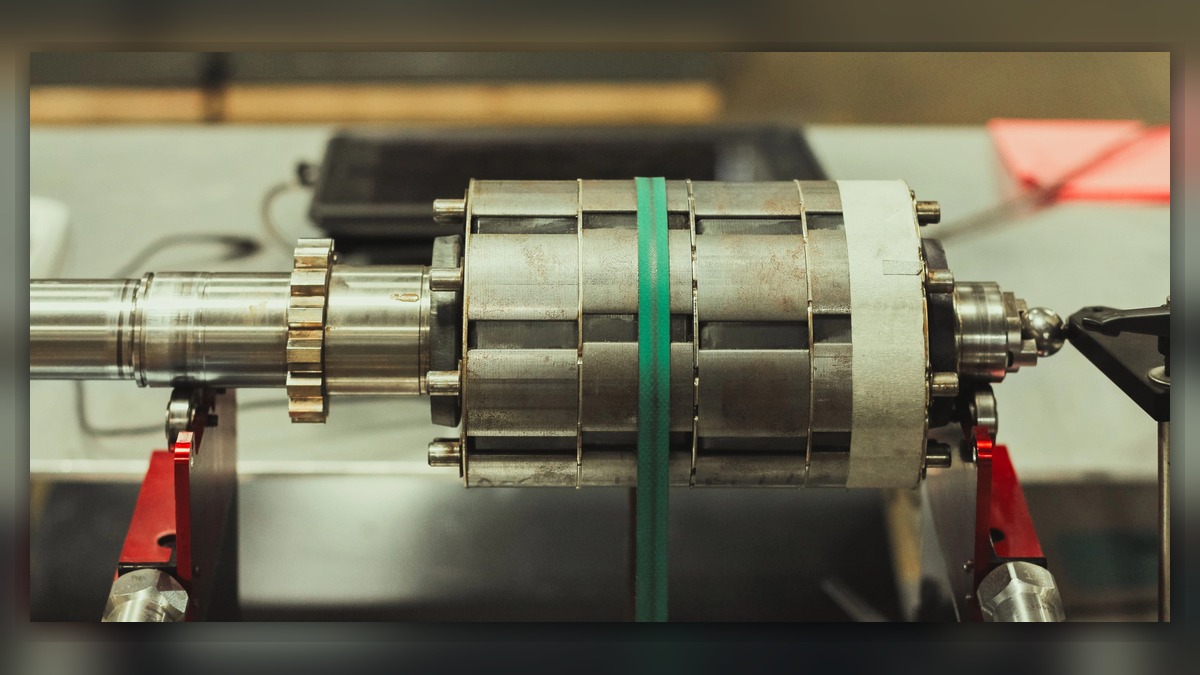
ABB servo motor repair should begin with evidence collection, not immediate motor replacement. An ABB robot axis fault may involve the motor, motor cable, feedback-related component, drive unit, power connection, configuration, or mechanical load. Record the complete alarm text, affected axis, controller and robot identification, operating condition, and reset behavior before diagnosis. The symptom alone does not prove that the servo motor is damaged, because several connected systems can produce similar symptoms.
Symptoms and Scope
This guide applies to ABB industrial robot systems where one axis shows a motor-related fault, fails to run, loses enable, draws abnormal current, or stops during operation. It is intended for diagnostic separation between the servo motor and its connected drive, cable, feedback, power, and mechanical systems. It does not establish a specific ABB motor model, connector layout, part number, or repair conclusion. Exact inspection methods depend on the robot generation, controller type, installed options, and applicable ABB documentation.
Information to Record First
Complete alarm code and full text: Preserve the exact message shown by the controller or teach pendant.
Date and exact time: Record when the fault occurred and whether it followed maintenance, cleaning, impact, or a process change.
Faulted axis: Identify the axis or external axis reported by the system.
Robot position/posture: Record the position and posture without moving the robot solely to reproduce the fault.
Program step or motion: Note the active program step and commanded movement.
Actual speed and load condition: Record the operating condition shown by the system, including whether the robot was stationary, accelerating, or carrying a load.
Reset result: State whether reset cleared the alarm, whether the axis enabled, and whether the condition returned.
Time until recurrence: Record recurrence timing only when it can be observed safely during normal controlled operation.
Related power, communication or feedback alarms: Preserve earlier and associated alarms because they can change the diagnostic branch.
Safety and Preparation
Apply the site lockout, isolation, and stored-energy procedures before opening a controller, disconnecting cables, or inspecting internal components. Do not use resistance, insulation, voltage, or continuity measurements unless the procedure, instrument, isolation state, and measurement points are confirmed for the installed ABB system. Avoid changing calibration, motor parameters, or drive settings as a diagnostic shortcut. Motion observation may be performed only by suitably competent personnel, under controlled conditions, and in accordance with the applicable ABB operating information and site safety procedure.
ABB Servo Motor Repair Diagnostic Sequence
Start with the input evidence: complete alarms, controller model, robot model, affected axis, alarm history, and recent maintenance. Inspect the decision target first: visible damage, contamination, loose external connections, cable strain, signs of overheating, and conditions around the motor and controller. If damage or a disturbed connection is found, document it and correct it only under an approved procedure, then determine whether the alarm clears without assuming that the motor itself failed.
Next, compare the fault timing with operating conditions. A fault that appears only during a particular posture, speed, acceleration, or load may require inspection of cable routing, motion-related connections, feedback integrity, drive behavior, or mechanical resistance. This observation does not independently prove a cable, feedback-related component, motor, or drive failure. If an earlier power, communication, or feedback alarm is present, investigate that earlier event first because it may explain the later motor symptom.
If the alarm remains after external checks, the required next input is the exact controller and motor identification, including labels, hardware revision, and available maintenance records. Professional testing can then separate the servo motor from the cable, feedback path, drive unit, and mechanical system using procedures appropriate to that ABB configuration. A motor should not be condemned solely because an axis will not move, and a drive should not be replaced solely because the controller reports a motor-related alarm.
Component Inspection or Identification
Before any ABB servo motor repair or replacement decision, match the exact motor model, part number, hardware revision, connector layout, brake arrangement where applicable, and robot-axis assignment. Photograph labels and connections before removal. Compare the suspected component with the installed system documentation rather than relying on appearance or a similar catalog description. If contamination, impact, heat damage, bearing noise, winding damage, or feedback-related symptoms are suspected, describe the observed evidence and keep the conclusion provisional until suitable testing confirms the failure mode.
When Repair or Replacement May Be Considered
Repair or replacement may be considered when documented testing identifies a component-level fault, when the component has confirmed physical damage, or when an approved maintenance procedure requires substitution for verification. The replacement must match the complete system requirements; a visually similar motor may not be compatible. If the evidence points to the controller or drive side, use a controller-specific diagnostic path instead of forcing a motor repair conclusion. The ABB robot repair service page provides a relevant route for broader system inspection: https://autonews.best/abb-robot-repair
Verification After Repair or Replacement
After service, verify that the original alarm is cleared, the correct axis identification remains available, safety circuits operate as intended, and the controller reports normal status. Confirm that the robot can perform the approved low-risk checks for the installation, including controlled movement, repeatability observations, and process-specific operation where required. Do not repeatedly cycle a fault or increase speed and load merely to reproduce it. Record the repaired component, test conditions, remaining alarms, and any follow-up maintenance requirement.
Information Required for a Repair Inquiry
For an inspection or repair assessment, provide the robot model, controller model, complete alarm code, alarm history, component label, fault conditions, and clear photographs of the motor, connectors, cable routing, and controller identification. Include the affected axis, recent service history, and whether the fault occurs at startup, during enable, or during motion. ZHB is an independent industrial robot inspection, repair and maintenance service provider that also supplies parts to overseas customers; manufacturer authorization should not be assumed from this description.
Conclusion
Effective ABB servo motor repair depends on separating motor evidence from cable, feedback, drive, power, configuration, and mechanical evidence. Complete records, configuration-specific procedures, and matched component identification reduce unnecessary replacement and support a safer repair decision.