
ABB Robot Maintenance After Servo Motor Replacement
A focused ABB maintenance guide for checking motor identity, cabling, calibration, brakes, motion, and alarms after servo motor replacement.
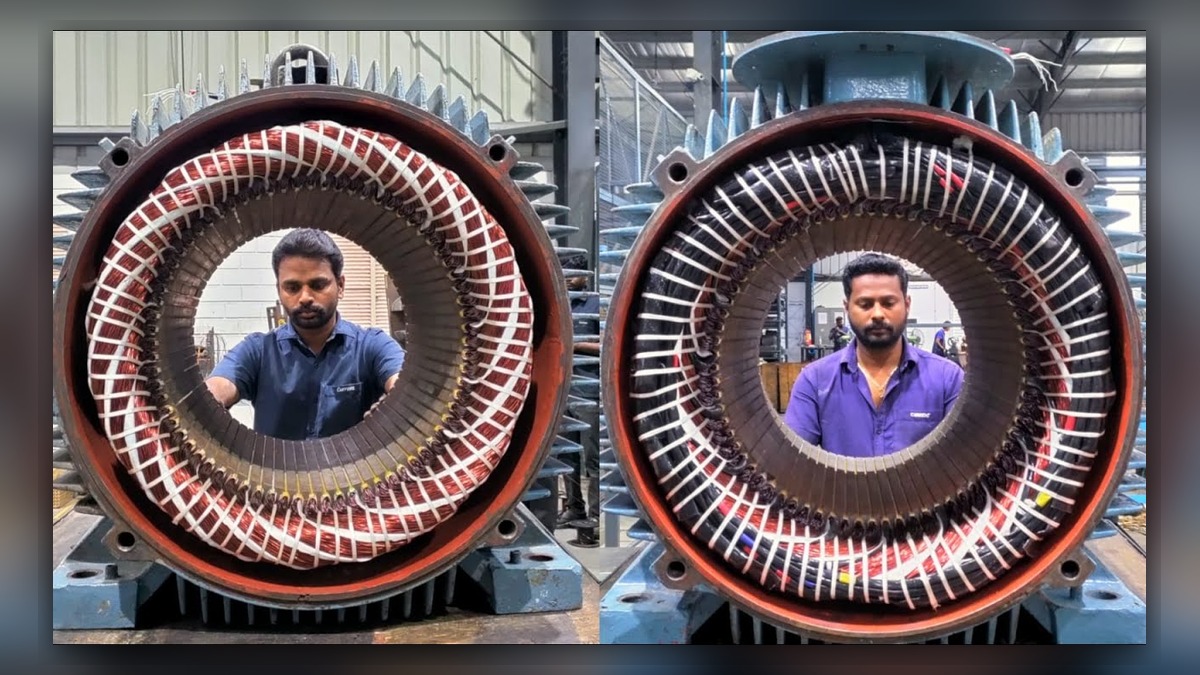
ABB robot maintenance after servo motor replacement should verify the installed motor, electrical connections, brake operation, calibration status, and controlled axis motion before production resumes. Record the complete alarm history, affected axis, robot position, and reason for replacement before clearing evidence. A motor-related symptom does not independently prove that the original motor was defective. Cables, connectors, drive equipment, feedback-related components, configuration data, mechanical loading, or an incorrect replacement part may produce similar behavior.
Symptoms and Scope
This guide applies to ABB industrial robot systems undergoing inspection after a servo motor has been repaired or replaced. It addresses situations such as an axis that will not enable, unexpected position behavior, abnormal noise, brake-release concerns, repeatability changes, or a new alarm appearing after the work.
It does not provide a universal motor replacement procedure. Motor construction, brake arrangements, connector layouts, calibration methods, and controller requirements vary by robot model, axis, motor part number, and system configuration. The applicable ABB documentation and site procedures must govern the work.
Information to Record First
Preserve the evidence available before resetting alarms or changing configuration. The maintenance record should include:
Complete alarm code and full text:
Date and exact time:
Faulted axis:
Robot position/posture:
Program step or motion:
Actual speed and load condition:
Reset result:
Time until recurrence:
Related power, communication or feedback alarms:
Also record the robot model and serial number, controller model, motor label information, removed motor identity, replacement motor identity, and whether the replacement was new, repaired, or taken from another system. Note any work performed on axis cabling, brakes, gear units, or controller hardware at the same time.
Safety and Preparation
Isolate hazardous energy and secure the robot against unexpected movement according to the site safety procedure and applicable manufacturer information. A released brake or disconnected motor can allow an axis to move under gravity or an external load. Tooling, workpieces, and nearby equipment may change this risk.
Do not perform unsupported live measurements, bypass safety functions, or alter parameters merely to test whether the axis will move. Observation under power or motion should be conducted only by suitably competent personnel under controlled conditions.
ABB Robot Maintenance Diagnostic Sequence
1. Confirm the replacement identity. Compare the exact motor model, part number, hardware revision, connector layout, and label details with the removed unit and the robot documentation. Physical fit alone does not establish electrical or functional compatibility. If identity cannot be confirmed, stop the restart process and obtain the required parts information.
- Inspect the completed installation. With energy safely isolated, check for visible connector damage, contamination, displaced seals, trapped cables, loose accessible connections, and routing that could be pulled or crushed as the robot moves. Verify that no tools, shipping restraints, or temporary supports remain in the work area.
- Review alarms before commanding motion. Examine the controller event history for power, drive, communication, brake, or feedback-related alarms. The first relevant alarm may be more useful than later alarms generated after repeated reset attempts. Do not classify the replacement motor as defective solely because an axis remains disabled.
- Verify calibration status. Motor removal can affect the relationship between the mechanical axis and the controllerâÂÂs stored position information. Determine whether the work requires calibration verification or restoration using the procedure applicable to the exact ABB robot and controller. Do not copy calibration values from another robot or make undocumented changes to obtain motion.
- Evaluate brake behavior. If the axis does not move after enabling, distinguish a brake-release issue from a drive, cable, configuration, or mechanical problem. Abnormal movement while stationary may also require investigation. Avoid repeatedly commanding motion against a brake or obstruction because this can increase equipment risk.
- Conduct a controlled motion check. After safety, identity, connection, alarm, and calibration checks are satisfactory, competent personnel may test the affected axis under controlled conditions. Begin according to the manufacturerâÂÂs commissioning information and site risk controls. Observe the axis for smooth response, correct direction, unexpected noise, position deviation, cable interference, and recurring alarms. Stop if behavior is abnormal rather than repeating the motion to reproduce the symptom.
How to Distinguish Similar Causes
A repaired or replacement motor may become the immediate suspect when the fault begins after installation, but timing alone is not proof. A connector that is not fully seated may cause intermittent feedback or power symptoms. Cable damage may appear only in a particular posture. Incorrect calibration information may cause position or path errors without an internal motor defect. A brake or mechanically loaded axis may prevent expected movement even when the electrical system is functioning.
Conversely, passing a stationary inspection does not prove that the installation is ready for production. Some issues appear only when cable routing changes with posture or when the axis operates under its normal load. Any controlled observation must remain within approved operating and safety limits.
When Repair or Replacement May Be Considered
ABB servo motor repair may be considered when inspection indicates internal electrical, brake, connector, bearing, or feedback-related damage and the exact motor can be professionally identified and tested. The decision should account for repairability, parts availability, contamination, mechanical damage, and the ability to verify the unit after service. Replacement may be more appropriate when the motor cannot be reliably restored or matched to the application, but neither option should be selected before external causes are evaluated.
For broader system diagnosis, the ABB robot repair service overview at https://autonews.best/abb-robot-repair explains inspection coverage for ABB robots and associated control equipment.
Verification After Repair or Replacement
Final verification should confirm that the original alarm does not return, calibration status is acceptable, the brake behaves correctly, and the axis moves smoothly through an approved test range. Check repeatability with the siteâÂÂs validated method, inspect cable behavior through permitted postures, and confirm that the robot can complete an authorized program at controlled conditions before normal production is restored. Record all replaced parts, configuration actions, alarm results, and acceptance observations.
Common Diagnostic Mistakes
Common errors include ordering a motor from appearance alone, clearing alarm history before recording it, assuming every axis fault is inside the motor, forcing motion against a brake or obstruction, and changing calibration or configuration without a verified baseline. Another mistake is accepting successful enabling as complete proof of repair; motion quality, positioning, cable routing, and recurrence must also be evaluated.
Information Required for a Repair Inquiry
ZHB is an independent industrial robot inspection, repair, and maintenance service provider that also supplies parts to overseas customers. For an assessment, provide the ABB robot model, controller model, complete alarm code, alarm history, affected axis, component label, fault conditions, reason for motor removal, and clear photographs of the motor, connectors, and installation area. These details help determine whether further system diagnosis, ABB servo motor repairs, or replacement-part identification should be considered.
Conclusion
Servo motor replacement is not complete when the component is merely installed. Effective ABB robot maintenance requires evidence preservation, exact part matching, connection inspection, calibration review, brake assessment, controlled motion verification, and documented acceptance. This sequence reduces the risk of replacing a sound component while an external cable, configuration, drive, or mechanical issue remains unresolved.