
ABB Teach Pendant Repair After Liquid Contamination
Learn how to assess an ABB teach pendant after liquid exposure, preserve fault evidence, and decide whether inspection, repair, or replacement is appropriate.
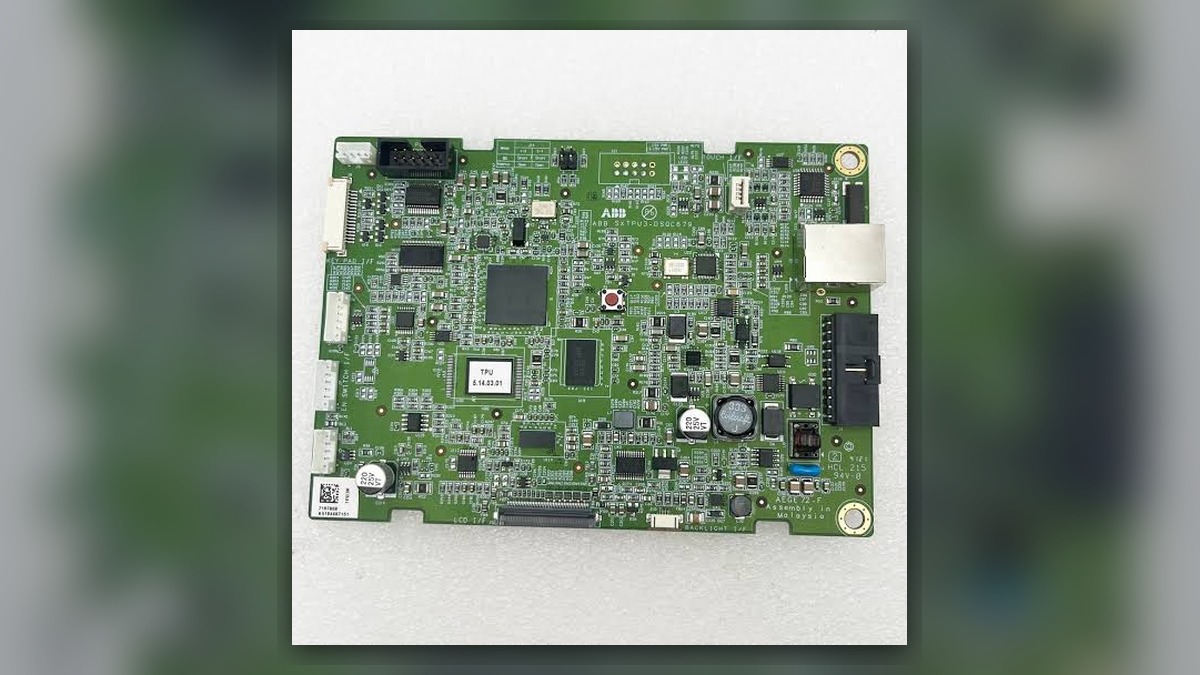
ABB teach pendant repair after liquid contamination begins by removing the affected unit from service and documenting the exposure, symptoms, controller alarms, and pendant identification. Liquid may affect the display, touchscreen, keys, enabling device, emergency-stop circuit, cable, connectors, or internal electronics. However, a blank screen, erratic input, or failed startup does not independently prove that the pendant is irreparable. The controller, connection path, and safety system must also be considered before selecting repair or replacement.
Symptoms and Scope
This diagnostic approach applies to clearly identified ABB robot teach pendants that have been splashed, exposed to coolant mist, handled with wet gloves, or found near another confirmed liquid source. The exact pendant model, controller generation, part number, hardware revision, and connector arrangement must be recorded because inspection procedures and replacement compatibility can differ.
Possible symptoms include a blank or unstable display, unintended touchscreen activity, keys that respond intermittently, failure to establish normal communication with the controller, or a safety-related function that does not return to its expected state. Visible residue around the housing seam, cable entry, buttons, or connector can support a contamination concern, but external residue alone does not establish the condition of the internal electronics.
This article is not a procedure for diagnosing an unexplained controller startup fault, robot-axis alarm, or general safety-circuit failure when no pendant exposure is known. Those conditions require a broader ABB robot repair investigation.
Information to Record First
Preserve the available evidence before cleaning the exterior, disconnecting equipment, or attempting another restart. Repeated power cycling should not be used simply to reproduce a suspected contamination fault.
Complete alarm code and full text:
Date and exact time:
Faulted axis:
Robot position/posture:
Program step or motion:
Actual speed and load condition:
Reset result:
Time until recurrence:
Related power, communication or feedback alarms:
Also record the pendant model, complete part number, serial or identification label, controller model, connection method, liquid type if known, estimated exposure location, and whether the equipment was energized during the event. Take clear photographs of the pendant surfaces, cable entry, connector, contamination pattern, and labels.
Safety and Preparation
Follow the ABB operating information for the installed robot and the factory’s isolation and electrical-safety procedures. A liquid-exposed pendant must not be assumed safe because its display still operates. Safety-related devices, including the emergency-stop control and enabling device where fitted, require appropriate verification before the robot returns to production.
Do not open the pendant, apply heat, spray cleaning fluid into openings, or perform energized internal measurements without the correct repair documentation, equipment, and competence. Uncontrolled drying methods can deform plastics, move contamination deeper into the assembly, or destroy evidence needed for diagnosis.
ABB Teach Pendant Repair Diagnostic Sequence
1. Define the exposure. Identify the liquid, affected area, exposure duration, and whether the pendant was connected and energized. Conductive, corrosive, or residue-forming liquids may create different inspection requirements, but the liquid type should not be guessed when it is unknown.
- Inspect the exterior without energizing the suspect unit. Look for cracked housing sections, damaged seals, residue, discoloration, swollen labels, cable-jacket damage, bent connector features, or contamination around controls. If structural or connector damage is visible, isolate the pendant for professional evaluation rather than attempting another operational test.
- Review the controller evidence. Check the alarm history and event timing using approved access methods. Determine whether the controller recorded pendant communication, safety-chain, power, or system faults at the time of exposure. An alarm identifies the affected function or diagnostic branch; it does not automatically identify the pendant circuit that requires repair.
- Separate pendant symptoms from connection-path faults. Inspect accessible cable and connector areas for contamination, poor seating, damaged locking features, or strain. Inspection must be performed with the system in the safe state specified by the manufacturer and site procedure. Connector condition and controller-side faults can produce symptoms that resemble internal pendant damage.
- Arrange controlled component assessment. A repair facility can evaluate the identified pendant for contamination, corrosion, damaged interfaces, input faults, display problems, and cable defects using procedures appropriate to that model. Internal findings should determine whether cleaning, component-level repair, cable service, housing work, or replacement is technically reasonable.
How to Distinguish Similar Causes
Timing is important. A symptom that began immediately after documented liquid exposure supports a contamination investigation, but correlation is not final proof. A pre-existing worn cable, loose connection, controller fault, or damaged operator control may have produced a similar result.
Intermittent operation after drying also does not confirm recovery. Residue and corrosion can continue to affect connections after visible moisture has disappeared. Conversely, failure to start does not prove that the main pendant electronics are damaged until the connection path and relevant controller conditions have been assessed.
When Repair or Replacement May Be Considered
Repair may be considered when the unit is identifiable, damage can be assessed, required parts are available, and the repaired safety and operator functions can be properly verified. Replacement may be more appropriate when contamination is extensive, the enclosure is structurally compromised, critical parts are unavailable, or reliable verification cannot be completed.
Any replacement must match the exact ABB pendant model, part number, hardware revision, connector layout, and controller compatibility. Physical similarity is not sufficient evidence of interchangeability. For broader ABB robot inspection support, see https://autonews.best/abb-robot-repair.
ZHB is an independent industrial robot inspection, repair, and maintenance service provider that also supplies parts to overseas customers. For one repair inquiry, provide the robot model, controller model, complete alarm code, alarm history, pendant label, fault conditions, known liquid type, and clear photographs of the housing, cable, connector, and contamination area.
Verification After Repair or Replacement
Before production release, inspect the assembled pendant and connection path, confirm that the controller starts without relevant new alarms, and verify the display, touchscreen or keys, communication, and applicable operator controls. Safety-related functions must be tested under the manufacturer’s instructions and the site validation procedure.
Any observation requiring robot motion may be performed only by suitably competent personnel under controlled conditions. Begin with the site-approved low-risk verification state and confirm stable operation without deliberately repeating the contamination event or another hazardous condition. Record the repaired or replacement component identification, test results, alarm history, and release authorization in the maintenance file.
Common Diagnostic Mistakes
Common mistakes include repeatedly reconnecting a wet pendant, assuming that a working display proves the safety controls are unaffected, cleaning away evidence before taking photographs, replacing the pendant without checking its cable and controller connection, or purchasing a visually similar spare without matching its full identification. Another mistake is returning the pendant to service after superficial drying without evaluating residue or corrosion risk.
Conclusion
A liquid-exposed ABB teach pendant requires isolation, accurate fault records, exterior and connection-path inspection, and model-specific professional assessment. Symptoms such as a blank display, unstable input, or communication failure identify where diagnosis should begin, not which component has conclusively failed. Repair or replacement should be selected only after the exposure, pendant condition, controller evidence, and exact hardware identity have been evaluated.