
Industrial Automation Robot Repair Services Market Scope
A technical guide to evaluating robot repair service scope, diagnostic capability, parts control, documentation, and post-repair verification.
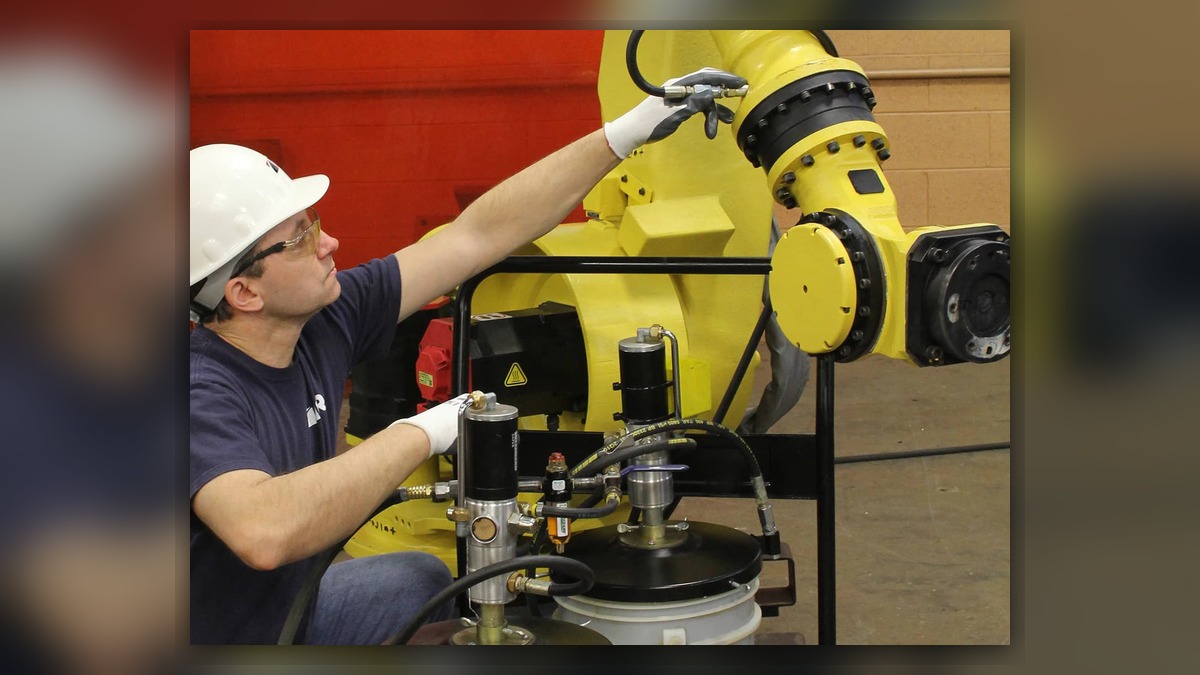
The industrial automation robot repair services market covers fault diagnosis, component repair, preventive maintenance, parts supply, on-site support, and controlled restart verification. Before requesting service, record the complete alarm, affected robot and controller, operating conditions, and any preceding events. These details help separate power, cable, communication, configuration, drive, feedback, and mechanical possibilities. A stopped robot or recurring alarm does not independently prove that a controller, motor, drive, or feedback-related component is damaged.
Service Scope and Equipment Coverage
A technically qualified service scope should identify the supported robot brands, controller generations, component families, and types of work. ABB, FANUC, KUKA, and YASKAWA systems use different controller architectures, diagnostic records, software environments, and component identification methods. General claims of multi-brand capability should therefore be supported by model-specific inspection procedures and suitable test resources.
Customers should also establish whether the requirement concerns an on-site system fault or a removable component. On-site work may involve the robot, controller, safety interfaces, external equipment, communication network, tooling, and facility power. Workshop work may focus on a controller module, servo amplifier, teach pendant, motor, power supply, or cable assembly. A workshop cannot reproduce every machine interaction unless the relevant configuration and fault evidence are available.
Industrial Automation Robot Repair Services Market Capabilities
Service capability should be evaluated by diagnostic depth rather than by a simple list of accepted brands. A useful provider should be able to review alarm history, identify the applicable equipment scope, inspect visible condition, verify component identity, and explain what evidence supports repair or replacement.
The initial assessment should distinguish among several fault stages:
Power and startup faults that prevent normal controller operation
Safety or interlock conditions that block enabling
Communication or configuration faults affecting connected devices
Drive, motor, cable, or feedback-related symptoms
Mechanical resistance, wear, leakage, collision damage, or loss of accuracy
Environmental damage involving dust, heat, coolant, oil, or moisture
These categories can overlap. For example, an axis fault may originate in a drive, cable, motor, feedback-related component, connector, mechanical load, or configuration issue. The alarm text, alarm order, affected axis, robot posture, and recurrence conditions are needed before selecting a diagnostic branch.
Information to Record First
Complete alarm code and full text:
Date and exact time:
Faulted axis:
Robot position/posture:
Program step or motion:
Actual speed and load condition:
Reset result:
Time until recurrence:
Related power, communication or feedback alarms:
Also record the robot model, controller model, serial identifiers, component part number, hardware revision, and any recent maintenance or production change. Photographs should clearly show labels, connectors, visible damage, and the installed arrangement without exposing personnel to energized equipment.
Safety and Preparation
Robot troubleshooting must follow the manufacturerâÂÂs operating information and the factoryâÂÂs isolation, lockout, and access-control procedures. Stored energy, gravity-loaded axes, external axes, tooling, and connected machinery can remain hazardous after production stops. Internal electrical inspection, disassembly, or observation under motion should be performed only by suitably competent personnel under controlled conditions.
Do not repeatedly reset or cycle equipment merely to reproduce an intermittent fault. Repetition can obscure the original alarm sequence and may increase equipment risk. Preserve logs, backups, and configuration records before work that could alter stored data.
Evaluating the Diagnostic Process
A repair provider should first confirm the exact equipment and review the event sequence. External power, accessible connections, environmental conditions, and visible damage can then be checked without assuming a failed part. The next inspection branch should follow the recorded evidence.
If the symptom changes with robot posture, cable routing and moving connections may require attention, but posture dependence alone does not identify a specific cable or connector. If a fault appears under load, the actual payload data, tooling condition, mechanical resistance, and drive-related records should be reviewed. If startup fails, the power, safety, controller, and configuration stages should be separated before modules are exchanged.
Where a suspected component is removed, its exact model, part number, hardware revision, and connector layout should be matched. Similar-looking parts are not automatically interchangeable. Professional bench inspection may be appropriate when safe system-level checks cannot distinguish the component from the connected equipment.
Repair, Replacement, and Verification
Repair may be considered when the component is identifiable, inspectable, and supported by an appropriate test process. Replacement may be more practical when damage cannot be reliably corrected, but the decision should account for configuration, revision, installation condition, and available evidence. Neither approach should be presented as certain to resolve the robot fault until connected systems have also been considered.
Post-service verification should confirm that the original alarm is absent, related alarms have not appeared, connections are secure, and required configuration or calibration information remains valid. Functional checks should begin under controlled conditions and follow the applicable manufacturer and site procedures. Safety functions must not be bypassed for testing. Production release should use documented acceptance criteria relevant to the repaired system, such as startup behavior, commanded motion, repeatability, tooling operation, and communication with surrounding equipment.
Common Procurement Mistakes
A low quotation does not establish diagnostic capability. Buyers should clarify whether inspection, repair, parts, software work, travel, return freight, and verification are included. They should also ask what happens when workshop testing finds no fault or when the removed component passes inspection.
Another mistake is sending a component without its label or fault history. This removes the context needed to reproduce an intermittent condition. Conversely, replacing parts on site without documenting the result can create an expensive sequence of unverified substitutions.
Repair Inquiry Information
For an industrial robot repair inquiry, provide the robot model, controller model, complete alarm code, alarm history, component label, fault conditions, and clear photographs. Include recent maintenance, collision, contamination, power interruption, or configuration changes when relevant. ZHB is an independent industrial robot inspection, repair, and maintenance service provider that also supplies parts to overseas customers. General service information is available at https://autonews.best/services, while ABB-specific support is described at https://autonews.best/abb-robot-repair.
Conclusion
The industrial automation robot repair services market should be assessed through equipment coverage, evidence-based diagnosis, component identification, safety controls, and documented verification. Accurate fault records allow factories and integrators to compare providers on technical scope rather than broad marketing claims. The objective is not simply to exchange a suspected part, but to establish a defensible fault path and confirm controlled operation after service.