
Robot Maintenance | Where Do Faults Typically Occur?
Oil leakage in industrial robots is also a common problem. This is often due to some industrial robot manufacturers failing to properly seal the internal gearbox and castings during production. In such cases, we first need to conduct a comprehensive inspection of the machine to confirm the exact location of the leak, then disassemble the gearbox and redo the sealing.
Archive article: time-sensitive statements reflect the original material and are not a current news update.
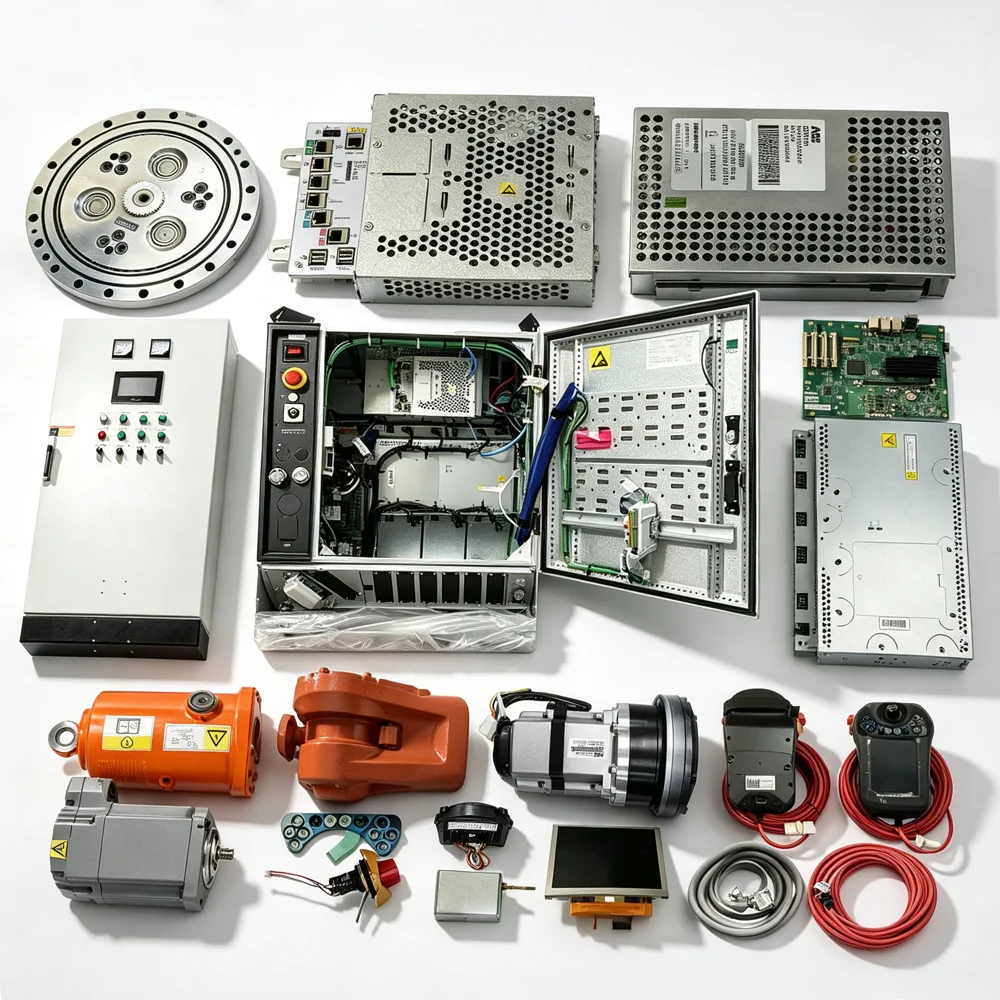
With the increasing popularity of industrial robots and robotic arms, numerous low-cost, affordable industrial robotic arms have flooded factory production lines. Due to varying costs and uneven configurations, these industrial robots have also brought many headaches for enterprise users, such as frequent failures and various unexpected situations. Next, we will discuss in detail the industrial robot maintenance and fault issues faced by some companies, as well as which areas are prone to problems with industrial robotic arms.
Among robot maintenance faults, operational errors are an aspect that cannot be ignored. Due to enterprise employees' lack of familiarity with operating industrial robots, machine alarms are often triggered. For such problems, as long as the industrial robot possesses strong responsibility, they can usually be handled and resolved quickly.
Oil leakage in industrial robots is also a common problem. This is often due to some industrial robot manufacturers failing to properly seal the internal gearbox and castings during production. In such cases, we first need to conduct a comprehensive inspection of the machine to confirm the exact location of the leak, then disassemble the gearbox and redo the sealing.
Robot maintenance alarm faults are even more commonplace. Whether due to operational errors, loose wiring, or other issues, as long as they cause the robot system to alarm, corresponding alarm codes will be displayed on the system or drive. It is necessary to troubleshoot the problem step by step based on the alarm code until the fault is found and resolved.
Furthermore, low configuration of industrial robots can easily lead to faults. Some companies, in order to reduce costs, choose industrial robots with inferior components, resulting in frequent alarms or unstable performance during use. Some friends who purchased extremely cheap industrial robots have experienced serious faults like axis dropping. For such problems, repair is generally not recommended; instead, it is advisable to directly purchase high-quality robots from other brands.
In summary, as long as industrial robots are purchased with reasonable configurations based on actual needs, with suitable plans formulated, rigorous discussions held, and acquired at an appropriate price, then these robots are basically not prone to frequent failures.
During the use of robotic arm maintenance, how can communication faults be prevented and reduced?
It is necessary to adopt high-quality communication technology. Utilize advanced wireless communication protocols, such as 5G, Wi-Fi, Bluetooth, LORA, etc., to ensure good signal transmission even in complex environments.
Equipping with high-performance antennas is crucial. This can significantly enhance signal reception and transmission capabilities, ensuring stable signal coverage in every corner, thereby avoiding the appearance of signal dead zones.
Strengthening the security and stability of data transmission is also essential. We need to use encryption technology to protect transmitted data, preventing it from being illegally stolen or tampered with. At the same time, establish redundancy mechanisms so that when the main communication line fails, it can quickly switch to a backup line, ensuring uninterrupted communication.
Improving the hardware's anti-interference capability is equally important. Shielding measures can be adopted to reduce the impact of external electromagnetic interference on communication, thereby ensuring the accuracy of data transmission.
Regularly testing and maintaining the communication system is also an effective means to prevent communication faults. Through professional testing tools and technical methods, we can promptly discover and resolve potential communication issues, such as signal attenuation and equipment failure, thereby evaluating and optimizing communication performance.
Developing stable and reliable communication control programs is also indispensable. This program needs to be able to monitor the communication status in real-time, providing timely warnings and handling for abnormal situations. At the same time, we also need to continuously optimize the program algorithms to improve the efficiency of data transmission and processing.
Optimizing layout is another important aspect of preventing communication faults. In environments with poor signals, such as elevator car tops and shafts, signal coverage can be strengthened by adding transmitters and repeaters, thereby reducing signal dead zones.
By implementing the above series of measures, communication faults during robot maintenance and use can be effectively prevented and reduced, ensuring their stable operation in complex industrial environments.
Documentation archive number: 23025. Content compiled from the old site database.