
ABB Robot Maintenance After Manipulator Cable Replacement
A structured post-replacement inspection helps identify routing, connector, feedback, and motion issues before an ABB robot returns to production.
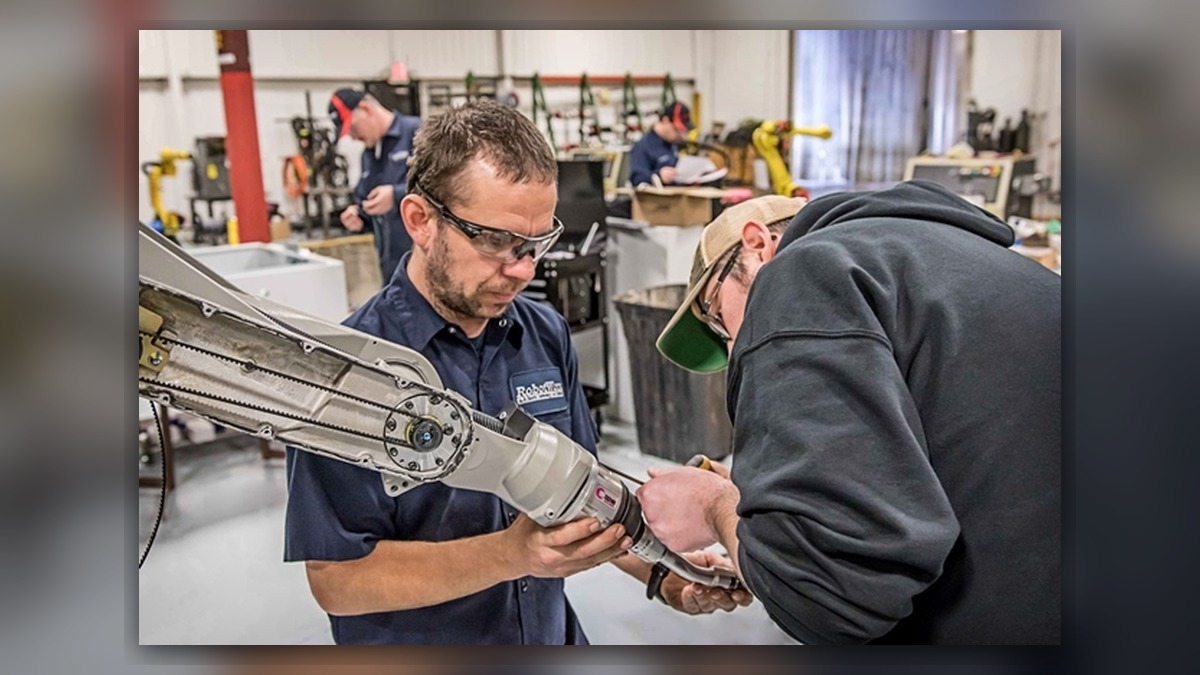
ABB robot maintenance after manipulator cable replacement should confirm cable identity, routing, connector engagement, alarm history, and controlled robot movement before production resumes. Potentially involved systems include motor power, feedback, brakes, communication, safety circuits, and external process equipment. Record the robot and controller models, affected axis, complete alarms, and operating conditions before further work. A post-service alarm or motion problem does not independently prove that a servo motor, drive unit, or feedback-related component is damaged.
Symptoms and Scope
This guidance applies to ABB industrial robots inspected after replacement or reconnection of an internal manipulator cable harness, axis cable, or related connector assembly. It is intended for post-service faults such as an axis that remains stationary, an intermittent alarm, unexpected feedback loss, or a problem that appears only in a particular posture.
It does not provide model-specific pinouts, resistance limits, connector locations, calibration procedures, or safety-circuit bypass instructions. These details depend on the installed robot, controller, harness version, and system configuration. External DressPack equipment may require a separate inspection because it can include process cables and application-specific routing outside the manipulator.
Information to Record First
Preserve the evidence before resetting alarms or disturbing connectors again. Maintenance personnel should collect the following information:
Complete alarm code and full text:
Date and exact time:
Faulted axis:
Robot position/posture:
Program step or motion:
Actual speed and load condition:
Reset result:
Time until recurrence:
Related power, communication or feedback alarms:
Also record the ABB robot model, controller model, manipulator serial information, replacement cable part number, hardware revision where shown, and the reason the original cable was replaced. Photographs taken before and after replacement can help assess routing and connector orientation.
Safety and Preparation
Apply the site lockout and energy-isolation procedure before opening covers, touching connectors, or inspecting internal cable routing. Account for stored energy, gravity-loaded axes, attached tooling, and process equipment. Do not disconnect a motor or feedback connection while the system is energized.
Before testing movement, restore all guards, covers, strain reliefs, and protective devices required by the applicable ABB documentation and site procedure. Any observation under motion must be performed by suitably competent personnel under controlled conditions. Do not repeatedly move the robot into a posture that may pinch, stretch, or damage a cable merely to reproduce an intermittent fault.
ABB Robot Maintenance Diagnostic Sequence
- Confirm the replaced assembly. Compare the installed cable label with the robot model, serial information, original part information, and service documentation. The exact part number, hardware revision, branch arrangement, connector layout, and mechanical interfaces must match the installed system. Physical fit alone does not establish compatibility.
- Review the complete alarm history. Determine whether the first event concerns power, feedback, communication, safety, or another system. A later motor or axis alarm may be a consequence rather than the initiating fault. Preserve the event order and timestamps before clearing the log.
- Inspect visible routing with power isolated. Look for trapped sections, sharp bends, unsupported branches, contact with moving structures, damaged protective covering, contamination, and strain near connectors. Compare the routing with model-specific service information and any photographs made before removal. Correct routing cannot be judged solely from whether the covers can be installed.
- Inspect connector installation. Check that each connector is in its intended location, correctly oriented, fully seated, and secured by its specified locking feature. Examine accessible housings for bent structures, displaced seals, contamination, heat discoloration, or previous mechanical damage. Do not probe terminals or modify connector keys without an approved procedure.
- Separate constant faults from posture-related faults. A fault present immediately after startup may direct attention toward cable identity, connector placement, configuration, or a connection that is not fully engaged. A fault associated with one posture may indicate cable tension, interference, or an intermittent connection, but posture alone cannot identify the failed component.
- Evaluate the affected system rather than assuming motor damage. Motor power, brake control, feedback, drive equipment, and the cable assembly can produce overlapping symptoms. ABB servo motor repair should be considered only after the evidence supports a motor-side problem and the cable, connector, controller, and mechanical load have been assessed.
- Perform a controlled functional check only after static inspections are satisfactory. Follow the applicable ABB operating information and site risk controls. Begin with the minimum movement necessary to verify the serviced area, monitor the alarm history, and stop if abnormal sound, resistance, cable movement, or a new alarm appears. Production-speed testing should not be the first verification step.
How to Distinguish Similar Causes
A connector problem may appear directly after service or change when a connector is correctly reseated under isolated conditions. A routing problem is more likely when inspection shows tension, compression, rubbing, inadequate support, or interference through the permitted motion range. A drive-side or motor-side fault requires additional evidence from the complete alarm sequence and professional component testing.
Mechanical resistance, brake problems, payload conditions, and tooling interference can also affect axis movement. Do not interpret high effort, stalling, or unusual noise as proof of an electrical cable failure without checking the mechanical conditions and relevant alarm records.
When Repair or Replacement May Be Considered
Replace or professionally evaluate the cable assembly if inspection identifies physical damage, incompatible identification, compromised locking features, or a repeatable connection-related fault supported by the alarm record. If evidence instead points toward the controller or drive system, ABB IRC5 inspection and repair information is available at https://autonews.best/products/abb-irc5-kong-zhi-gui-yu-ji-xiu.
ZHB is an independent industrial robot inspection, repair, and maintenance service provider that also supplies parts to overseas customers; relevant ABB service information is available at https://autonews.best/abb-robot-repair. A repair inquiry should include the robot model, controller model, complete alarm code, alarm history, cable or component label, fault conditions, and clear photographs of the routing, connectors, and identification plates.
Verification After Service
After correction or replacement, verify that no new alarms appear, safety functions remain operational, and the serviced cable stays supported without visible tension or interference during permitted controlled movement. Confirm the affected axis and then the required production motions according to the site acceptance plan. Where calibration or positional data may have been affected by the work, use the applicable ABB procedure rather than assuming that normal movement proves accuracy.
Conclusion
Post-replacement troubleshooting should proceed from identification and alarm evidence to routing, connectors, system separation, and controlled verification. An axis symptom alone cannot determine whether the cable, drive, motor, feedback-related component, brake, or mechanical system is responsible. Accurate records and model-specific service information reduce unnecessary part replacement and support a safer return to production.