
ABB Robot Maintenance After Weld Spatter Exposure
A focused ABB robot maintenance procedure for assessing weld spatter on wrist components, cables, seals, tooling, and protective covers.
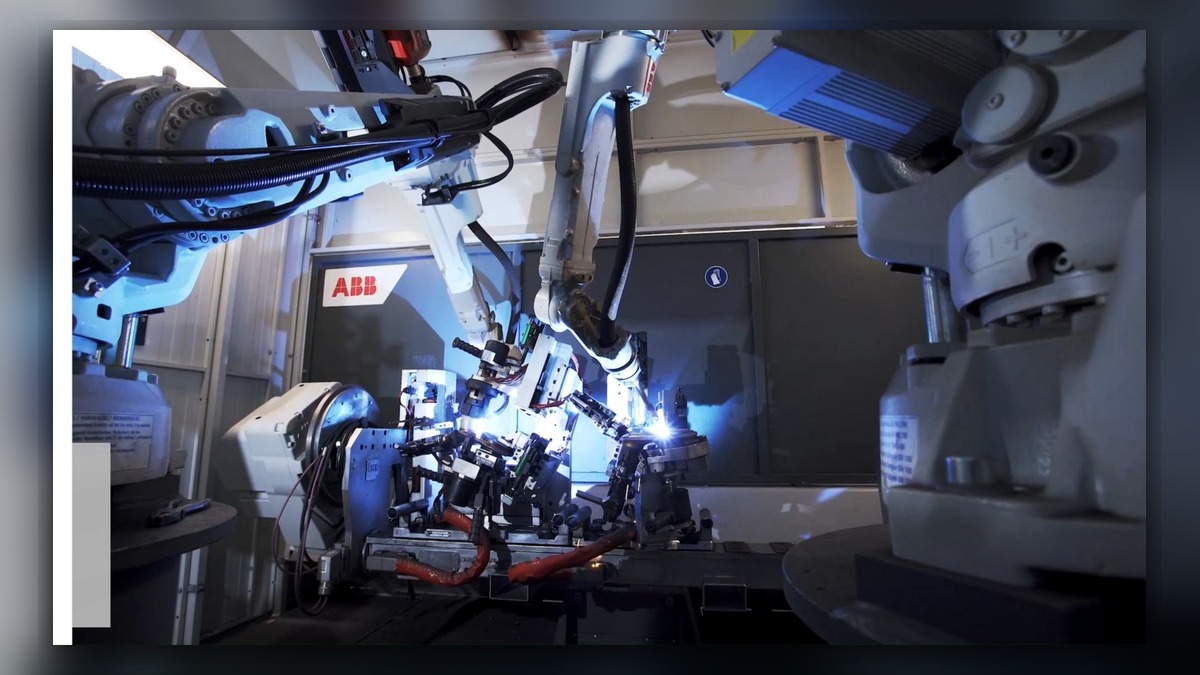
ABB robot maintenance after weld spatter exposure should begin with the wrist, tooling, cable routing, protective covers, and nearby connectors. Record any alarms, affected axes, robot posture, and operating conditions before cleaning or moving components. Spatter deposits can restrict movement, damage cable jackets, obstruct cooling, or conceal mechanical wear, but their presence alone does not prove that a motor, gearbox, feedback-related component, or controller has failed. The inspection must separate surface contamination from functional damage.
Symptoms and Scope
This maintenance approach applies to ABB robots operating near arc-welding processes where molten particles or accumulated welding debris can reach the manipulator, dress package, torch mount, fixtures, or exposed cabinet ventilation surfaces. The exact inspection requirements depend on the robot model, installed process equipment, protective package, controller type, and site environment.
Possible warning signs include damaged cable jackets, stiff dress-package movement, restricted wrist travel, contamination around seals, loose protective covers, intermittent process signals, unusual noise, or repeat alarms occurring in similar postures. These symptoms may have electrical, mechanical, tooling, or process-equipment causes. They should not be used independently to condemn an ABB robot component.
Information to Record First
Preserve fault evidence before resetting alarms, cleaning deposits, or changing cable positions. Maintenance personnel should record:
Complete alarm code and full text:
Date and exact time:
Faulted axis:
Robot position/posture:
Program step or motion:
Actual speed and load condition:
Reset result:
Time until recurrence:
Related power, communication or feedback alarms:
Also identify the ABB robot model, controller model, serial information, installed welding equipment, tooling configuration, dress-package arrangement, and any recent process or maintenance changes. Photographs taken before cleaning can show where debris accumulated and whether the condition is associated with a particular posture or welding direction.
Safety and Preparation
Place the robot in a safe maintenance state according to the applicable ABB operating information and the factory’s lockout and energy-isolation procedure. Account for electrical energy, pneumatic pressure, hot surfaces, sharp spatter, suspended tooling, and axes that may move when brakes or external equipment are serviced.
Do not pull cables, scrape seals, open motors, or remove structural fasteners merely to investigate visible deposits. Cleaning methods must be compatible with the affected surface, cable material, connector, cover, and process equipment. Aggressive scraping or unsuitable chemicals can create damage that was not present before maintenance.
ABB Robot Maintenance Inspection Sequence
- Review alarms and operating conditions. Determine whether the event involved robot motion, the welding process, external equipment, communication, or a safety stop. If another alarm occurred first, investigate that event before treating contamination as the primary cause.
- Inspect exposed surfaces. Look for concentrated spatter on wrist housings, torch brackets, cable supports, protective covers, and areas close to the weld. Note cracked covers, missing fasteners, blocked openings, damaged identification labels, and deposits that could interfere with moving clearances.
- Examine the dress package through the robot’s normal working range without forcing it. Check for abrasion, flattened sections, cuts, heat damage, tight bends, displaced clamps, and contact with sharp deposits. Observation under motion may be performed only by suitably competent personnel under controlled conditions and in accordance with ABB instructions and site safety procedures. Do not repeat a risky movement solely to reproduce a fault.
- Check connectors and process interfaces. Inspect accessible connector bodies, cable entries, strain reliefs, torch interfaces, and external junction points for visible heat damage, looseness, contamination, or mechanical stress. Do not disconnect or open an interface unless the equipment has been made safe and the correct procedure is available.
- Assess wrist movement and tooling clearance. Deposits on the torch mount, collision device, fixture, or dress package can change clearance without indicating internal robot damage. Compare the observed routing and mounting arrangement with approved installation documentation. Confirm that tooling has not shifted and that the declared load data still matches the installed tool and accessories.
- Inspect cabinet exposure separately. If welding debris has reached an IRC5 cabinet or another ABB controller, inspect external ventilation paths, filter condition, door sealing, and visible cable entries. Internal cabinet inspection should be completed only by qualified personnel after safe isolation. ABB IRC5 inspection and repair information is available at https://autonews.best/products/abb-irc5-kong-zhi-gui-yu-ji-xiu.
How to Distinguish Surface Deposits from Component Damage
Loose contamination that can be removed using an approved method may require cleaning and improved protection rather than component replacement. Escalate the investigation when deposits have melted a cable jacket, damaged a connector, restricted a moving interface, entered an unsealed area, or are associated with repeat alarms in a consistent posture.
Unusual noise or resistance requires careful separation of external interference from internal mechanical wear. Disconnecting tooling or process equipment for isolation should occur only under an approved maintenance plan. Visible spatter near a joint does not establish gearbox, bearing, brake, motor, or seal failure.
When Repair or Replacement May Be Considered
Professional inspection may be appropriate when a cable has exposed conductors, a connector is heat-damaged, a cover no longer protects the assembly, motion remains restricted after safe cleaning, or alarms continue after external causes have been addressed. Any replacement must match the exact ABB model, part number, hardware revision, connector layout, and installed options.
ZHB is an independent industrial robot inspection, repair, and maintenance service provider that also supplies parts to overseas customers. The broader ABB robot repair service is described at https://autonews.best/abb-robot-repair.
Verification After Maintenance
Before returning the robot to production, verify that guards and covers are installed, connectors are secure, cables have adequate clearance, tooling is correctly mounted, and removed energy sources have been restored under the site procedure. Review the alarm history and confirm that no new power, communication, safety, or feedback alarm is present.
Controlled low-risk functional checks should follow the applicable ABB instructions. Confirm process signals, tool clearance, dress-package movement, and the affected program path before normal production resumes. Testing must not rely on repeatedly recreating a collision, cable pinch, or hazardous exposure.
Information Required for a Repair Inquiry
For an ABB robot repair inquiry, provide the robot model, controller model, complete alarm code, alarm history, component label, fault conditions, and clear photographs of the deposits, cables, connectors, wrist, tooling, and cabinet exposure. Include the posture or program stage where the symptom occurs and describe any cleaning, cable adjustment, tooling change, or reset already performed.
Conclusion
Weld spatter exposure calls for evidence-based ABB robot maintenance rather than immediate parts replacement. Record the event, inspect the contamination pattern, separate external interference from internal faults, and verify cables, tooling, covers, connectors, and controller ventilation. Repair or replacement should be based on confirmed damage and exact component identification.