
ABB Robot Maintenance for Cabinet Condensation Risk
Learn how to inspect an ABB robot controller after suspected condensation without assuming that visible moisture proves permanent component damage.
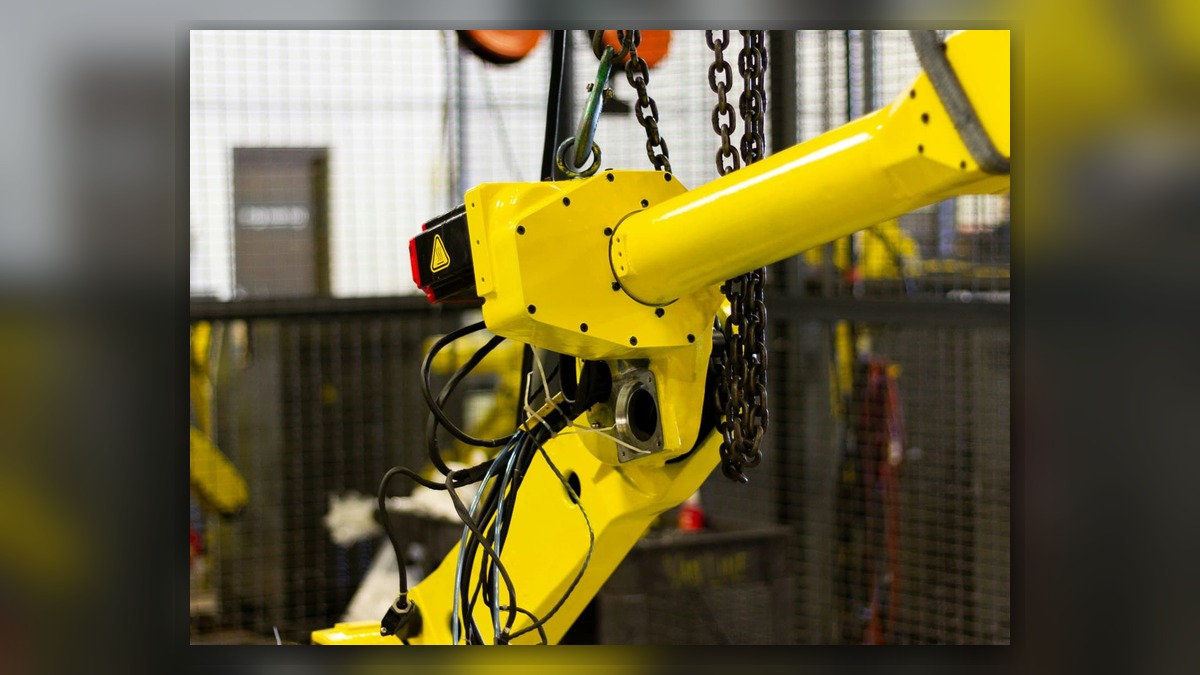
Condensation risk during ABB robot maintenance requires a controlled inspection of the controller, cabinet environment, connectors and fault history before power is restored. Record the robot and controller models, alarm details, event time and recent environmental conditions. Moisture can affect insulation, connectors, cooling paths and electronic assemblies, but dampness or an alarm alone does not prove that a drive, computer, motor or feedback-related component has failed. The contamination path and affected equipment must first be identified.
Symptoms and Scope
This guidance applies to ABB robot systems with suspected condensation inside or around the controller cabinet. Relevant observations may include visible droplets, damp filters, corrosion residue, unexplained startup faults or alarms that appeared after a temperature or humidity change. The exact controller variant and installed options must be confirmed before opening panels or identifying assemblies.
This article does not cover cabinets that have been flooded, directly sprayed or contaminated by coolant, oil or conductive process material. Those events require contamination-specific assessment. It also does not establish that a servo motor needs repair merely because an axis alarm occurred while moisture was present.
Information to Record First
Preserve evidence before alarms are cleared or equipment is moved. Photographs should show the cabinet exterior, suspected moisture location, cable entries, filters and component labels without exposing personnel to electrical hazards.
Complete alarm code and full text:
Date and exact time:
Faulted axis:
Robot position/posture:
Program step or motion:
Actual speed and load condition:
Reset result:
Time until recurrence:
Related power, communication or feedback alarms:
Also record whether the cabinet had recently been shut down, whether ambient temperature changed, and whether cooling or ventilation equipment was operating. These facts help distinguish internal condensation from an external leak or direct contamination.
Safety and Preparation
Follow the ABB documentation applicable to the installed controller and the site lockout and electrical safety procedure. Isolate hazardous energy before accessing internal cabinet areas. Stored electrical energy may remain after incoming power is disconnected, so required waiting periods and verification methods must come from the applicable manufacturer information.
Do not energize visibly wet equipment merely to reproduce a fault. Do not use uncontrolled heating, compressed air or improvised drying methods. These actions can move contamination into connectors, damage assemblies or leave hidden moisture behind. Inspection and recovery should be performed by suitably competent personnel.
ABB Robot Maintenance Diagnostic Sequence
1. Confirm the exposure boundary. Determine whether moisture is limited to the cabinet exterior, filter area or cable entry, or whether it has reached internal assemblies. If the source is unknown or active, correct and document it before considering restart.
- Review the alarm sequence. Use the event history to identify the first recorded fault rather than treating later communication, drive or axis alarms as the initiating event. Record any interruption of controller power and the operating state when the event began.
- Inspect without disturbing evidence. Look for droplets, water tracks, staining, residue, corrosion, damp dust and affected connector areas. Inspection should remain visual unless the applicable service information and technician competence support further work. A dry-looking surface does not independently prove that the underlying connector or assembly is unaffected.
- Check environmental controls. Inspect cabinet seals, cable-entry arrangements, filters, fans and heat-exchanger or cooling equipment where fitted. Compare the installed arrangement with the controller documentation. A blocked filter or inactive fan may affect cabinet temperature, but it does not by itself confirm why condensation occurred.
- Separate cabinet and manipulator evidence. If the event includes an axis-specific alarm, inspect the relevant external motor and feedback cable route for visible damage or contamination. Expand diagnosis to the motor only when the alarm history, insulation assessment or controlled component testing supports that direction. Unrelated moisture in the cabinet is insufficient evidence for ABB servo motor repair.
- Decide whether specialist inspection is required. Escalation is appropriate when moisture reached energized electronics, residue is present, corrosion is visible, insulation condition is uncertain or faults return after the environmental cause has been corrected. ABB IRC5 controller inspection and repair information is available at https://autonews.best/products/abb-irc5-kong-zhi-gui-yu-ji-xiu.
How to Distinguish Similar Causes
Condensation can coincide with other faults. Loose connectors, damaged cables, unstable external power, cooling failure and pre-existing electronic defects may produce overlapping symptoms. Diagnosis should therefore follow the earliest alarm and physical evidence.
A communication alarm does not automatically identify the communication board. An axis alarm does not automatically identify the motor or drive. Visible corrosion establishes exposure or deterioration at that location, but further assessment is still needed to determine whether cleaning, connector service, professional testing, repair or replacement is appropriate.
When Repair or Replacement May Be Considered
Repair may be considered when inspection identifies contamination, corrosion or an electrical defect within a serviceable controller or motor assembly. Replacement may be more appropriate when damage is extensive, the part cannot be tested reliably or an approved repair path is unavailable. The decision should reflect the exact fault evidence and production requirements rather than the alarm category alone.
Any spare must match the complete ABB model, part number, hardware revision and connector layout. Software compatibility and configuration requirements must also be checked against the installed system. ZHB is an independent industrial robot inspection, repair and maintenance service provider that also supplies parts to overseas customers; it does not represent itself as manufacturer-authorized.
Verification After Corrective Work
Before restart, confirm that the moisture source has been addressed, affected areas have been assessed by competent personnel, protective covers are installed and no tools or loose items remain. Restore power using the approved site and manufacturer procedure. Review startup messages and alarm history before enabling motion.
If controlled motion testing is necessary, it may be performed only by suitably competent personnel under controlled conditions and in accordance with ABB operating information and site safety procedures. Begin with the approved low-risk verification process for the cell. Confirm safety functions, controller status and relevant axis operation without deliberately recreating the harmful environmental condition.
Information Required for a Repair Inquiry
For an inspection or repair inquiry, provide the robot model, controller model, complete alarm code, alarm history, affected component label, environmental and operating conditions, and clear photographs of the cabinet, moisture path, connectors and labels. State whether power was present during the suspected exposure and whether any restart was attempted. Broader ABB robot repair service information is available at https://autonews.best/abb-robot-repair.
Conclusion
ABB robot maintenance after suspected cabinet condensation should establish the exposure source, preserve alarm evidence and separate environmental symptoms from confirmed component failure. Avoid powering wet equipment or replacing drives, motors and boards without supporting evidence. A documented inspection followed by controlled verification provides a safer basis for deciding whether cleaning, professional testing, repair or replacement is justified.