
ABB Robot Repair for Lost or Incorrect Calibration
Diagnose ABB robot calibration loss by reviewing event records, axis marks, service history, feedback conditions, and mechanical integrity before recalibration.
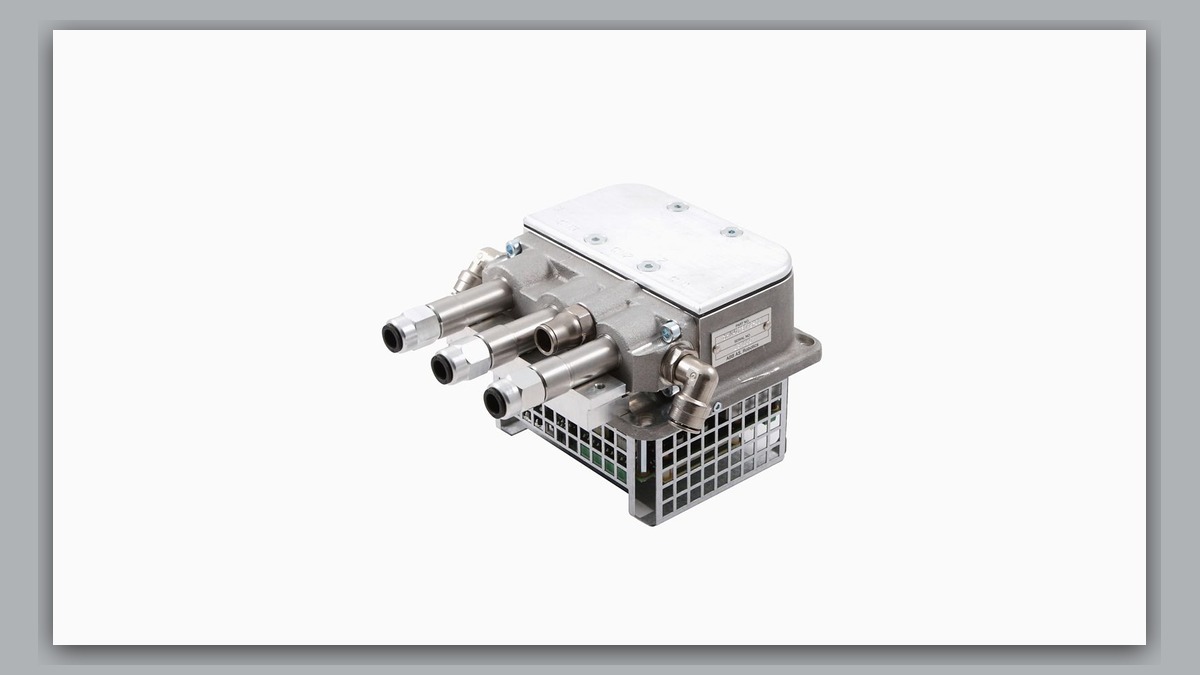
Lost or incorrect calibration on an ABB robot can cause position errors, unexpected path deviation, or disagreement between displayed axis positions and physical reference marks. Potentially involved systems include calibration data, axis feedback, controller storage, cabling, and mechanical transmission components. Before beginning ABB robot repair, record the controller events, affected axes, robot posture, recent maintenance, and when the symptom first appeared. Position error alone does not prove that a feedback-related component, motor, or gearbox is damaged.
Symptoms and Scope
This diagnostic approach applies to ABB industrial robots where the reported position no longer agrees with the known mechanical reference, a previously accurate process has shifted, or calibration status became uncertain after maintenance, battery-related events, controller work, motor replacement, or mechanical intervention.
It is not a substitute for the model-specific ABB calibration instructions. Calibration methods, reference marks, controller functions, and required tools depend on the robot family, controller generation, installed options, and axis configuration. A process offset affecting only one tool or work object may indicate application data rather than robot calibration loss.
Information to Record First
Preserve the available evidence before changing calibration data, restoring files, or moving reference positions. Record:
Complete alarm code and full text: Include every related event, not only the latest message.
Date and exact time: Correlate the event with maintenance, shutdown, or controller work.
Faulted axis: Identify every axis suspected of position disagreement.
Robot position/posture: Record where the robot was when the issue was detected.
Program step or motion: Note the commanded operation and affected process point.
Actual speed and load condition: Record the operating state shown by approved production records.
Reset result: State whether the event cleared and whether position accuracy changed.
Time until recurrence: Note whether the condition is persistent or intermittent.
Related power, communication or feedback alarms: Preserve their order from the event history.
Also record the robot model, controller model, serial information, software identification, calibration status, installed external axes, and recent repair history. Obtain a current backup through the approved ABB procedure when the controller condition permits it. Do not overwrite the only known backup.
Safety and Preparation
Place the robot in a controlled maintenance state according to the site risk assessment and applicable ABB operating information. Calibration checks may involve robot movement and access near mechanical reference marks. Motion observation must therefore be performed only by suitably competent personnel using controlled speed, an approved operating mode, and the required safeguarded procedure.
Do not enter the safeguarded area or release brakes solely to reproduce an unexplained movement. Support any axis that could move under gravity before work affecting its motor, brake, or transmission. Calibration values should not be edited as a trial-and-error troubleshooting method.
ABB Robot Repair Diagnostic Sequence
Begin with the event history. Determine whether the position concern followed battery service, controller replacement, software restoration, motor work, gearbox work, a collision, or manual axis movement. The sequence matters because data loss, incorrect data restoration, mechanical displacement, and feedback faults require different corrective actions.
Next, separate application error from robot-axis error. Check whether the deviation affects every program using the robot or only one tool, work object, fixture, or product. A localized process shift can result from changed tooling, fixture movement, an incorrect work object, or a modified program point. If several independent applications show a consistent axis-related deviation, continue with robot calibration checks.
Compare the physical axis reference marks with the controller-displayed position using the model-specific procedure. The inspection target is agreement between the robot’s known mechanical reference and its recorded axis position. Misalignment indicates that calibration or mechanical position requires investigation, but it does not identify the failed component by itself.
Review previous backups, calibration records, and maintenance reports. Confirm that any proposed data belongs to the exact robot and controller combination. A backup from another robot, even one of the same nominal model, must not be treated as interchangeable calibration evidence.
Inspect accessible feedback and motor cable connections for looseness, contamination, pin damage, abrasion, or evidence of recent disturbance. Use the robot documentation to identify the relevant connection points. If feedback-related alarms or intermittent position changes are present, preserve the event sequence and cable observations before disconnecting components.
Evaluate mechanical history before recalibration. Collision, motor removal, gearbox replacement, coupling disturbance, brake work, or uncontrolled axis movement can change the relationship between stored calibration and the physical mechanism. Visible reference-mark disagreement after mechanical work requires verification of assembly and mechanical reference conditions before data is updated.
How to Distinguish Similar Causes
Calibration data loss generally produces a data or reference problem that must be reconciled with the physical robot. Application-coordinate errors may shift selected paths while the robot’s mechanical reference remains credible. A loose fixture or changed tool can imitate calibration error without affecting axis calibration.
Mechanical wear may appear as variable position, backlash, noise, or load-dependent deviation rather than a stable offset. Feedback or cable issues may be intermittent and can be accompanied by related controller events. None of these observations independently confirms motor, gearbox, cable, or controller failure; the evidence must be matched to the affected axis and operating history.
When Repair or Replacement May Be Considered
Professional inspection is appropriate when calibration cannot be reconciled with the mechanical marks, feedback events recur, the axis has experienced a collision, or previous mechanical work cannot be verified. An ABB IRC5 controller requiring broader power, drive, storage, or interface inspection may be evaluated through https://autonews.best/products/abb-irc5-kong-zhi-gui-yu-ji-xiu.
Component replacement should follow confirmed test findings, not the calibration symptom alone. Any replacement motor, feedback-related component, cable, controller board, or mechanical assembly must match the exact model, part number, hardware revision, and connector layout. Relevant calibration and commissioning procedures remain necessary after replacement.
Verification After Corrective Work
After approved data correction or component repair, verify calibration status and reference-mark agreement using the applicable ABB procedure. Then confirm tool and work-object data, selected reference positions, and representative production paths under controlled conditions. Begin with a safeguarded, low-risk verification rather than immediately returning to unrestricted automatic production.
Check the event history again and document the final calibration information, replaced components, backup identity, inspection results, and acceptance outcome. Robot maintenance records should clearly distinguish restored data, recalibration, mechanical correction, and component repair.
Information Required for a Repair Inquiry
ZHB is an independent industrial robot inspection, repair and maintenance service provider that also supplies parts to overseas customers. For an industrial robot repair inquiry, provide the robot model, controller model, complete alarm code, alarm history, component label, fault conditions, recent service work, and clear photographs of the controller labels, affected components, cable connections, and axis reference marks. ABB robot repair service information is available at https://autonews.best/abb-robot-repair.
Conclusion
Incorrect ABB robot positioning should be diagnosed by preserving event evidence, separating application offsets from axis-reference errors, checking maintenance history, comparing mechanical marks with recorded positions, and investigating supported electrical or mechanical causes. Recalibration can correct verified reference data, but it should never be used to conceal an unresolved feedback, cable, assembly, or transmission problem.