
How to Check Robot Servo Motor Brakes? Preventing Brake Non-Release and Axis Drift
Robot brakes are responsible for holding position during shutdown and preventing falls during power loss. Checks should include release voltage, coil, mechanical clearance, holding capacity, and the condition of related cables.
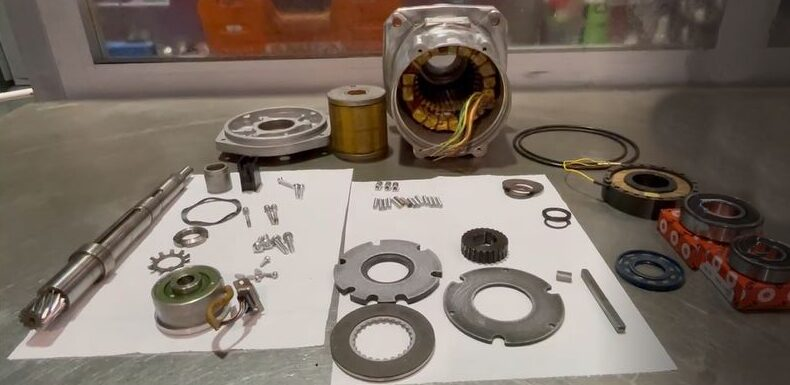
After the performance of brakes on robot vertical axes or heavy-load axes degrades, issues such as startup overload, abnormal braking noise, or axis drift during shutdown may occur. The problem could originate from the brake itself, or from the power supply and brake cables.
- Key Inspection Points
- Observe whether the brake release sound is normal when the servo is enabled and if the axis starts smoothly.
- Measure the brake power supply, coil resistance, and the contact condition of connectors.
- Check if the axis position changes slowly after shutdown, and rule out influences from the reducer and load.
- Inspect whether the brake cable has intermittent broken conductors under different postures.
- Handling Steps
- Complete the holding capacity check under safe support and controlled conditions.
- Clean or repair connectors, brake cables, and the brake power circuit.
- When the brake is worn or the coil is abnormal, perform maintenance or replacement according to the motor structure.
- After handling, verify low-speed startup, repeated shutdown, emergency stop, and power-off holding status.
- Common Misconceptions
- Disassembling the vertical axis motor or brake without mechanical support.
- Only checking the drive unit for startup overload, ignoring the brake not releasing.
- Forcing the drive to move an incompletely released brake by increasing output.
- Summary
Robot brakes are responsible for holding position during shutdown and preventing falls during power loss. Checks should include release voltage, coil, mechanical clearance, holding capacity, and the condition of related cables.
Industrial Robot Repair Hotline: +86 18122009539
Contact Repair Engineer: +86 18122009539