
ABB IRB 2600 Robot Axis 4 Reducer Abnormal Noise Repair: Gear Wear, Mechanical Backlash, and Positioning Deviation Troubleshooting
When an ABB IRB 2600 robot's axis 4 exhibits abnormal noise, vibration, temperature rise, or positioning deviation, the fault may originate from reducer gear wear, bearing abnormalities, poor lubrication condition, servo motor brake failure, or incorrect tool load parameters. This article, combining the IRB 2600 robot and the IRC5 control system, introduces the judgment methods for axis 4 mechanical faults, reducer inspection, servo system troubleshooting, and restart verification procedures.
In this article
ABB IRB 2600 Robot Axis 4 Reducer Abnormal Noise Repair: Troubleshooting Gear Wear, Mechanical Backlash, and Positioning Deviation
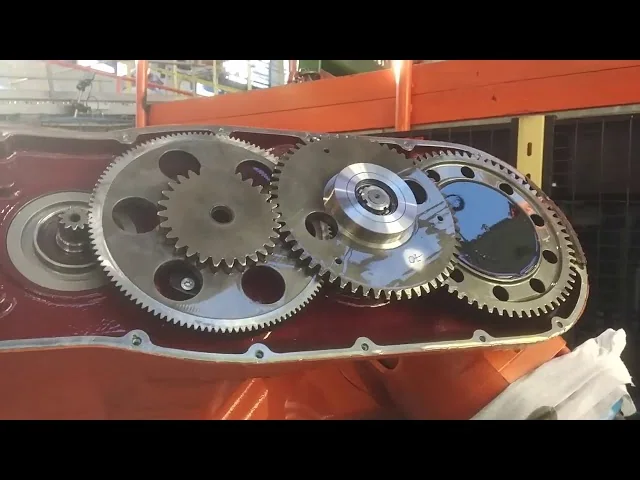
ABB IRB 2600 is a six-axis industrial robot commonly used for arc welding, material handling, machine tending, and material processing. Axis 4 is located in the front motion chain of the robot wrist, and its operating condition directly affects the posture, trajectory accuracy, and repeatability of the end-of-arm tooling.
After long-term high-speed reciprocating operation, incorrect tool load settings, abnormal lubrication status, or mechanical collisions, the Axis 4 reducer may exhibit abnormal noise, directional change jitter, increased backlash, and program point deviation.
On-site Diagnosis Conclusion:
If the abnormal noise is concentrated at a fixed angle of Axis 4 or during directional changes, priority should be given to checking the reducer gears, bearings, mechanical connections, and cable interference. If servo alarms occur simultaneously during power-up or enabling, it is also necessary to check the motor brake, encoder feedback, power cables, and the IRC5 drive channel.
Scope of Application:
This article primarily applies to ABB IRB 2600 series robots configured with the IRC5 control system. Specific reducer part numbers, lubrication materials, tightening requirements, and calibration methods should be confirmed based on the robot's complete model, serial number, and the corresponding ABB technical documentation.
1. Common Symptoms of Axis 4 Reducer Failure
When the mechanical part of the ABB IRB 2600's Axis 4 malfunctions, the following may occur:
- Periodic friction sounds during low-speed rotation of Axis 4.
- Impact sounds during forward and reverse directional changes.
- Jitter during wrist movement.
- Slight rebound of the end-of-arm tooling after the robot stops.
- Deviation when the same program point is approached from different directions.
- Noticeable temperature increase in the Axis 4 motor or reducer.
- Oil leakage or oil stains at the reducer connection points.
- IRC5 controller displays overcurrent, overload, or following error alarms.
- Operation is basically normal under no load, but the fault worsens after tool installation.
Record the axis number, direction, speed, and mechanical angle corresponding to the abnormal noise. Simply recording "robot abnormal noise" makes it difficult to accurately locate the fault.
2. Information to Collect Before Repair
Before starting disassembly and inspection, record the following:
- Complete robot model, e.g., the specific payload and reach version of the IRB 2600.
- Robot body serial number.
- IRC5 controller model and RobotWare version.
- Alarm codes, alarm text, and faulty axis number.
- Position and direction of Axis 4 when the abnormal noise occurs.
- Robot's operating speed and load at the time.
- Tool weight, center of gravity, and inertia parameters.
- Whether any collisions or tool changes have occurred recently.
- Time and materials used for the last lubrication maintenance.
- Photos of the Axis 4 motor, reducer, and wrist structure.
Simultaneously back up the robot program, system parameters, tool data, calibration data, and revolution counter information to provide a basis for subsequent disassembly, assembly, and calibration.
3. First, Rule Out Tool and External Cable Issues
Abnormal noise in Axis 4 may not originate from the reducer. Tool installation and external cables can also increase wrist load.
Focus on checking:
- Whether the tool weight exceeds the robot's allowable range.
- Whether the tool's center of gravity and inertia parameters are correct.
- Whether bolts for the welding torch, gripper, or flange are loose.
- Whether tool cables are entangled around Axis 4.
- Whether air hoses, water pipes, and welding cables restrict wrist rotation.
- Whether the end-of-arm tooling interferes with the workpiece or fixture.
If the abnormal noise disappears after removing external interference, adjust cable routing and tool status first; do not directly disassemble the reducer.
4. How to Determine Gear Wear in the Axis 4 Reducer
Wear on reducer gears or internal transmission components typically has the following characteristics:
- Abnormal noise repeats at fixed intervals.
- Sound significantly increases at specific angles.
- Impact occurs during forward/reverse directional changes.
- Noise frequency changes as operating speed increases.
- Rebound occurs at the wrist when stopping or changing direction.
- Repeatability error increases with higher load.
If abnormal noise only occurs at fixed mechanical angles, it may be related to localized tooth surface wear, bearing damage, or internal foreign objects.
When diagnosing, compare the operating state during low-speed forward rotation, low-speed reverse rotation, and at different angles. Do not verify the fault through prolonged high-speed operation to avoid further expanding the damage scope.
5. How Mechanical Backlash Affects Positioning Accuracy
The robot controller controls motor position based on encoder feedback, but the encoder typically only reflects motion on the motor side. When internal clearance in the reducer increases, the motor position may be correct, but the end-of-arm tooling can still exhibit mechanical deviation.
Common manifestations of mechanical backlash include:
- Different end positions when the same target point is approached from different directions.
- Brief free travel after Axis 4 changes direction.
- Slight swing in tool posture when stopping.
- Changes in weld angle, spray posture, or gripping direction.
- Short-term improvement after re-teaching, but deviation gradually reappears.
If the deviation is related to the direction of motion, prioritize checking mechanical backlash rather than directly modifying a large number of program points.
6. Methods for Judging Bearing Abnormalities
When bearings inside the Axis 4 reducer or support bearings are damaged, the following may occur:
- Continuous grinding or rustling sounds.
- Increased resistance in a certain rotation zone.
- Abnormal axial or radial clearance.
- Temperature rise after a period of operation.
- Metal particles present in the lubricating oil.
- Vibration becomes more pronounced with increased load.
Bearing failure may occur simultaneously with gear wear. During repair, do not replace only a single bearing while ignoring tooth surfaces, shaft diameters, seals, and lubrication status.
7. Lubrication Status Check
Insufficient lubrication, mismatched lubricants, or aged grease can accelerate wear on the reducer and bearings.
Inspection includes:
- Whether the reducer has any leaks.
- Whether the color of the lubricating oil or grease is abnormal.
- Whether moisture, dust, or metal particles are mixed in.
- Whether the correct materials were used during the last maintenance.
- Whether the filling quantity meets requirements.
- Whether the oil drain and fill positions are correct.
Different axes and versions of the IRB 2600 may use different lubrication materials. The specific model, quantity, and replacement method should be based on the corresponding robot manual and should not be directly substituted based on experience with other ABB robots.
8. Inspection of Axis 4 Servo Motor and Brake
Abnormal noise from Axis 4 may also originate from the servo motor bearings or the brake.
Key inspection points:
- Whether the motor exhibits abnormal heating during operation.
- Whether the motor produces humming or bearing noise.
- Whether the brake can fully release.
- Whether the power cables and connectors are loose or burnt.
- Whether the motor mounting bolts are loose.
- Whether there is any abnormality at the connection between the motor and the reducer.
When the brake does not fully release, Axis 4 will exhibit heavy operation, increased current, and abnormal temperature. Continuing operation in this state may simultaneously damage the motor and the drive.
9. Inspection of Encoder and Feedback Cables
If abnormal noise is accompanied by position jumps, encoder alarms, or following errors, the feedback link should also be checked:
- Motor encoder connector.
- Axis 4 feedback cable.
- Robot body moving cables.
- Feedback interface on the control cabinet side.
- Whether pins are bent, oxidized, or retracted.
- Whether cables are pinched in specific postures.
If the fault only occurs when the wrist rotates to a certain position, check if the cable is being tightened by the movement of Axis 4. When internal breakage occurs in a moving cable, the outer sheath may show no obvious damage.
10. Troubleshooting Directions for IRC5 Alarms
【Alarm when Axis 4 is powered on or enabled】
Priority checks: motor brake, power cables, encoder feedback, and drive channel.
【Periodic abnormal noise during low-speed operation】
Priority checks: reducer gears, bearings, and lubrication condition.
【Jitter or rebound during reversal】
Priority checks: reducer backlash, mechanical connections, and tool load.
【Alarm during high-speed or loaded operation】
Priority checks: load parameters, mechanical resistance, motor, and drive.
【Alarm occurring at a fixed posture】
Priority checks: robot body cables, tool cables, and local mechanical damage.
【Alarm after running for a period of time】
Priority checks: motor temperature rise, reducer temperature rise, and control cabinet cooling.
Alarm information may differ between RobotWare versions; refer to the corresponding equipment manual.
11. Axis 4 Reducer Maintenance Procedure
Step 1: Record the fault sound, position, direction, and operating speed.
Step 2: Save alarm logs and backup robot parameters.
Step 3: Check for tool, load, and external cable interference.
Step 4: Inspect Axis 4 appearance, oil leaks, and mechanical connections.
Step 5: Perform low-speed forward and reverse operation comparison.
Step 6: Check reducer backlash, bearings, and lubrication condition.
Step 7: Check servo motor, brake, and power cables.
Step 8: Check encoder feedback and IRC5 drive channel.
Step 9: Repair or replace confirmed damaged components.
Step 10: Complete calibration, low-speed testing, and process verification.
When disassembling the Axis 4 motor and reducer, use appropriate support, positioning, and lifting tools to avoid sudden wrist rotation or changes in mechanical position.
12. Post-Reducer Replacement Checks
After reducer repair or replacement, confirm:
- Reducer model and installation direction are correct.
- Connection flanges and positioning surfaces are clean.
- Fasteners are installed according to corresponding requirements.
- Lubrication material and filling quantity are correct.
- No leakage at sealing points.
- Connection between motor and reducer is normal.
- Power and feedback cables are securely installed.
- Axis 4 mechanical zero position and calibration status are correct.
- Tool data and load parameters are unchanged.
After replacement, do not only confirm that Axis 4 can rotate; also check backlash, positioning accuracy, noise, and temperature rise.
13. Post-Maintenance Restart Verification
After completing maintenance, perform the following in sequence:
- Check that no tools or foreign objects are left on the robot wrist.
- Confirm that protective covers, cables, and connectors are restored to normal.
- Check Axis 4 zero point and calibration data.
- Run Axis 4 forward and reverse at low speed.
- Listen for operating sounds at different mechanical angles.
- Perform multiple reversal and stop tests.
- Check reducer and motor temperature rise.
- Execute a multi-axis coordinated program with no load.
- Perform low-speed load testing after restoring the tool.
- Verify TCP and known reference points.
- Execute process sample testing.
- Run continuously and confirm abnormal noise and alarms do not reappear.
Only after mechanical condition, positioning accuracy, and actual production results are all normal can automatic production be resumed.
14. Common Questions
Must the reducer be replaced if Axis 4 produces abnormal noise?
Not necessarily. Tool cable interference, brake abnormalities, motor bearings, loose connection bolts, and lubrication issues can also cause abnormal noise. A systematic inspection should be completed first.
Can re-teaching program points solve positioning deviation?
If the deviation comes from mechanical backlash, re-teaching can only temporarily mask the problem and cannot restore reducer accuracy.
Does the reducer need recalibration after repair?
Whether recalibration is needed depends on the scope of disassembly and changes in mechanical position. After disassembling the motor, reducer, or changing the mechanical zero position, confirm the calibration status according to the corresponding manual.
Why does it run normally with no load but jitter when the tool is installed?
Check tool weight, center of gravity, inertia, reducer backlash, and servo motor output status.
15. Daily Maintenance Recommendations
- Regularly listen to low-speed operating sounds of each axis.
- Record temperature and vibration changes of Axis 4.
- Check for wrist oil leaks and external cable condition.
- Update load data promptly after tool changes.
- Check zero point and mechanical backlash after a robot collision.
- Replace lubrication materials according to the equipment manual.
- Avoid continuing high-speed loaded operation after detecting abnormal noise.
- Save backups of system, tool, and calibration data.
16. Summary
When abnormal noise, vibration, or positioning deviation occurs in the ABB IRB 2600's fourth axis, first eliminate tool load and external cable interference, then inspect the reducer gears, bearings, lubrication, servo motor, and encoder feedback.
Periodic abnormal noise and faults at fixed angles are typically related to the internal mechanical condition of the reducer; reversal rebound and direction-related deviations require a focused check on mechanical backlash; power-on alarms or position jumps should prompt inspection of the motor, feedback cables, and the IRC5 drive channel.
Technical content reference: ABB IRB 2600 robot structure, IRC5 control system technical documentation, and on-site industrial robot repair experience.
Content update time: September 2026
Repair Consultation
For repairs to the ABB IRB 2600 robot's fourth axis reducer, servo motor, or IRC5 control system, please provide the robot's complete model number, body serial number, alarm code, faulty axis number, video of the abnormal noise, and on-site photos.
Industrial Robot Repair Hotline: +86 18122009539
Contact Repair Engineer: +86 18122009539
Need a part or repair assessment?
Share the robot model, part number, fault details and destination country with our team.
Contact our team ↗