
ABB IRC5 Robot Repair for a Repeatedly Blown Fuse
Learn how to investigate a repeatedly blown ABB IRC5 controller fuse without bypassing protection or assuming that the connected module has failed.
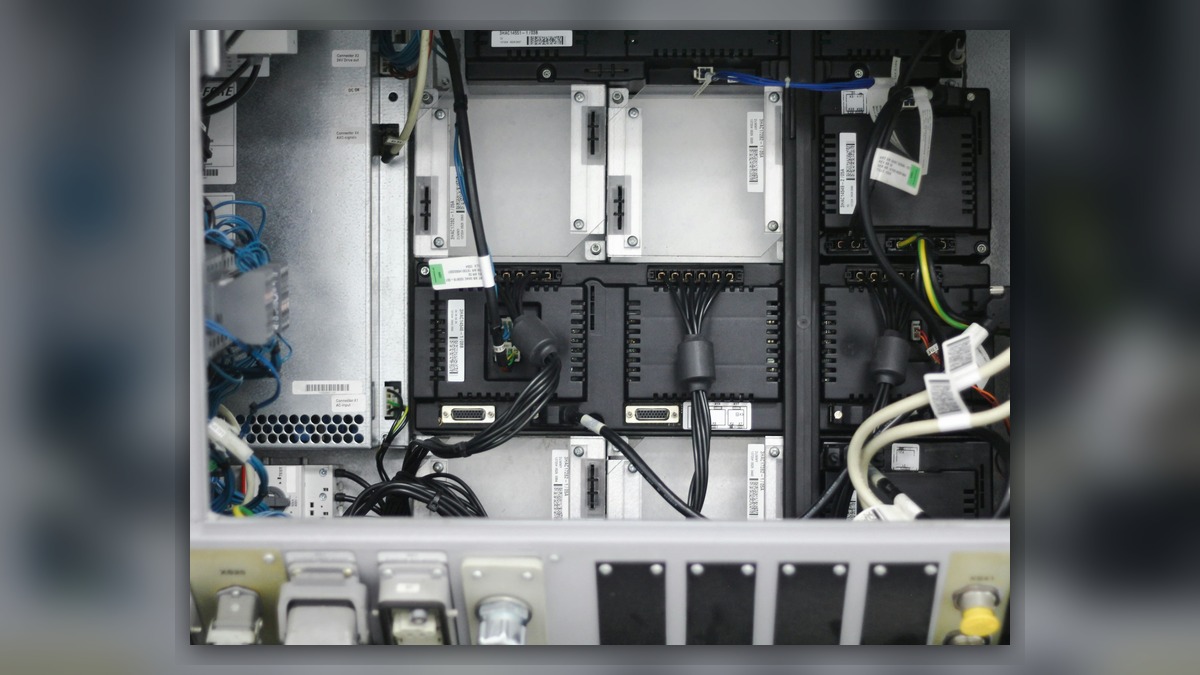
A repeatedly blown fuse in an ABB IRC5 controller indicates that a protected electrical branch requires investigation, but it does not identify the failed component by itself. Before beginning ABB robot repair, record the fuse designation, controller and robot models, event time, operating state, alarm history, and any recent cabinet work. Possible areas include wiring, connectors, power supplies, fans, accessories, or modules on the affected branch. The symptom alone does not prove that a controller board or drive unit is damaged.
Symptoms and Equipment Scope
This guide applies to ABB robot systems using an IRC5 controller when a correctly specified fuse opens during startup, motor-on activation, operation, or another repeatable stage. It does not provide a diagnostic procedure for OmniCore, S4, or unrelated controllers. Fuse locations, protected circuits, ratings, and isolation procedures vary by controller variant and installed options.
The timing of the event is important. A fuse that opens immediately after control power is applied presents a different diagnostic path from one that opens only when motor power is requested or after the cabinet has been operating. A fuse that opened once after known service work must also be distinguished from a recurring event with no recent intervention.
Do not substitute a higher-rated fuse, bypass the fuse, or repeatedly energize the controller to reproduce the failure. These actions can defeat circuit protection and increase damage or safety risk.
Information to Record First
Preserve the available evidence before resetting alarms or removing components. The initial record should include:
Complete alarm code and full text: Record every displayed event, not only the final shutdown message.
Date and exact time: Match the event with production, maintenance, and facility power records.
Faulted axis: State whether an axis was identified or whether the event affected the complete controller.
Robot position/posture: Record the stopped position if the event occurred during motion.
Program step or motion: Identify the instruction or operating stage active before the stop.
Actual speed and load condition: Record the displayed or configured operating condition when available.
Reset result: State whether control power returned and whether the fuse opened again.
Time until recurrence: Record whether the event was immediate, delayed, or intermittent.
Related power, communication or feedback alarms: Preserve earlier events that may identify the affected branch.
Also photograph the fuse position, its markings, surrounding connectors, module labels, and any visible heat discoloration. Confirm whether maintenance, accessory installation, cable replacement, cleaning, or liquid exposure occurred before the first event.
Safety and Preparation
Controller inspection must be performed by suitably competent personnel under the applicable ABB documentation and site lockout procedure. Stored electrical energy may remain after incoming power is isolated. Required discharge times and verification methods depend on the installed controller configuration and must be taken from the applicable manufacturer information.
Do not remove covers, disconnect internal wiring, or perform energized measurements unless the task is expressly supported by the correct service procedure and the technician is qualified for that work. If the fuse protects a safety-related or motor-power circuit, stop the investigation until the exact circuit and safe test method have been confirmed.
ABB Robot Repair Diagnostic Sequence
- Identify the exact protected circuit. Use the controller identification, fuse designation, electrical drawings, and option list to establish what the fuse supplies. The physical location alone is insufficient because cabinet layouts can differ. If the drawing set or configuration is unavailable, obtain it before selecting modules for removal or replacement.
- Confirm the installed fuse specification. Compare the fuse markings with the specification for the exact IRC5 variant. Record the current rating, voltage rating, fuse type, and any time-delay characteristic shown in the applicable documentation. A mismatched replacement can open under normal conditions or fail to provide the intended protection. Do not infer the correct specification from appearance.
- Review the event sequence. Determine whether the fuse opened at control-power startup, during motor-on activation, when a specific accessory started, or during robot movement. Earlier power, communication, cooling, or feedback events may narrow the investigation. The last alarm displayed may be a consequence of lost power rather than the initiating fault.
- Inspect for visible and recent changes. With the equipment safely isolated, inspect the relevant branch for damaged insulation, loose connectors, trapped wiring, contamination, corrosion, overheated terminals, or foreign conductive material. Pay particular attention to areas disturbed during recent service. Visible damage supports further inspection, but an undamaged appearance does not establish electrical integrity.
- Separate fixed and movement-related conditions. If the event occurs while the robot is stationary, prioritize controller wiring, cabinet devices, and continuously powered accessories on the protected branch. If it occurs only in a particular posture or motion stage, document that relationship without repeatedly moving the robot to provoke the fault. A posture-related event may justify inspection of moving cables and connected equipment, but it does not prove that the robot motor is defective.
- Evaluate branch components using approved procedures. Once the supplied circuit is identified, assess its wiring and connected devices according to the correct ABB service information. Any isolation or substitution test must preserve protective functions and use compatible parts. Professional bench testing may be appropriate when a power supply, fan assembly, board, or drive-related module remains suspect after the external circuit has been checked.
How to Distinguish Similar Causes
An immediate recurrence after verified installation of the correct fuse may indicate a persistent fault on the protected branch. A delayed recurrence can be associated with a component that changes condition during operation, but elapsed time alone cannot identify it. An event linked to recent cabinet service makes connector position, cable routing, tool debris, and disturbed wiring important inspection targets.
If the fuse remains intact after a module is disconnected under an approved procedure, that result narrows the affected branch but does not automatically condemn the removed module. Its cable, connector, external load, and power source may still require separate evaluation.
When Repair or Replacement May Be Considered
Repair or replacement should be considered only after the fault has been localized and the component identity verified. Match the exact ABB part number, hardware revision, electrical rating, connector layout, controller variant, and installed options. Do not fit a visually similar board, power unit, or accessory without confirmed compatibility.
For structured IRC5 inspection and repair support, see https://autonews.best/products/abb-irc5-kong-zhi-gui-yu-ji-xiu. ZHB is an independent industrial robot inspection, repair, and maintenance service provider that also supplies parts to overseas customers; it does not imply manufacturer authorization.
Verification After Repair
Before restoring operation, confirm that protective covers, grounding connections, connectors, and cable routing have been returned to their documented condition. Review the event log, verify normal controller startup, and check the functions associated with the repaired branch. Any powered or motion test must be conducted by competent personnel in a controlled area under the applicable ABB operating information and site safety procedure.
Do not treat one successful power cycle as complete proof of repair. Verification should reflect the original fault stage without deliberately recreating a hazardous condition. Record the installed part, fuse specification, actions completed, alarms observed, and final operating result for future ABB robot maintenance.
Information Required for a Repair Inquiry
Provide the robot model, IRC5 controller model and cabinet variant, complete alarm code and alarm history, fuse designation and markings, component labels, fault conditions, recent maintenance details, and clear photographs of the fuse location and surrounding connections. This information helps an industrial robot repair service determine whether onsite circuit inspection, component testing, repair, or a correctly matched replacement should be considered.
Conclusion
A repeatedly blown ABB IRC5 fuse is a protective response, not a component diagnosis. Effective troubleshooting depends on identifying the protected branch, confirming the correct fuse specification, preserving the event sequence, and inspecting recent changes before testing connected devices. Avoid bypassing protection or replacing modules without evidence. A controlled, configuration-specific investigation reduces the risk of secondary damage and unnecessary parts replacement.